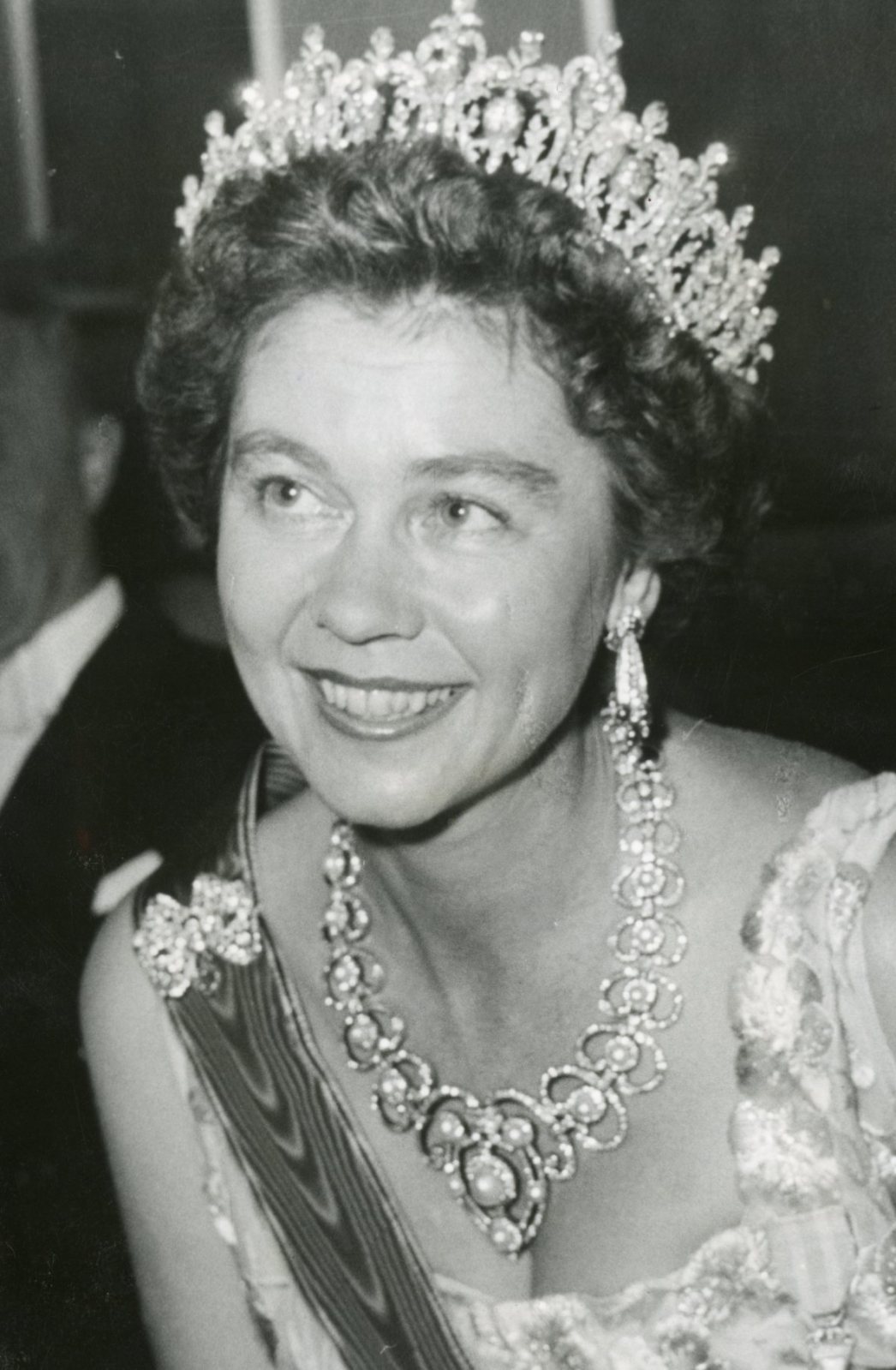
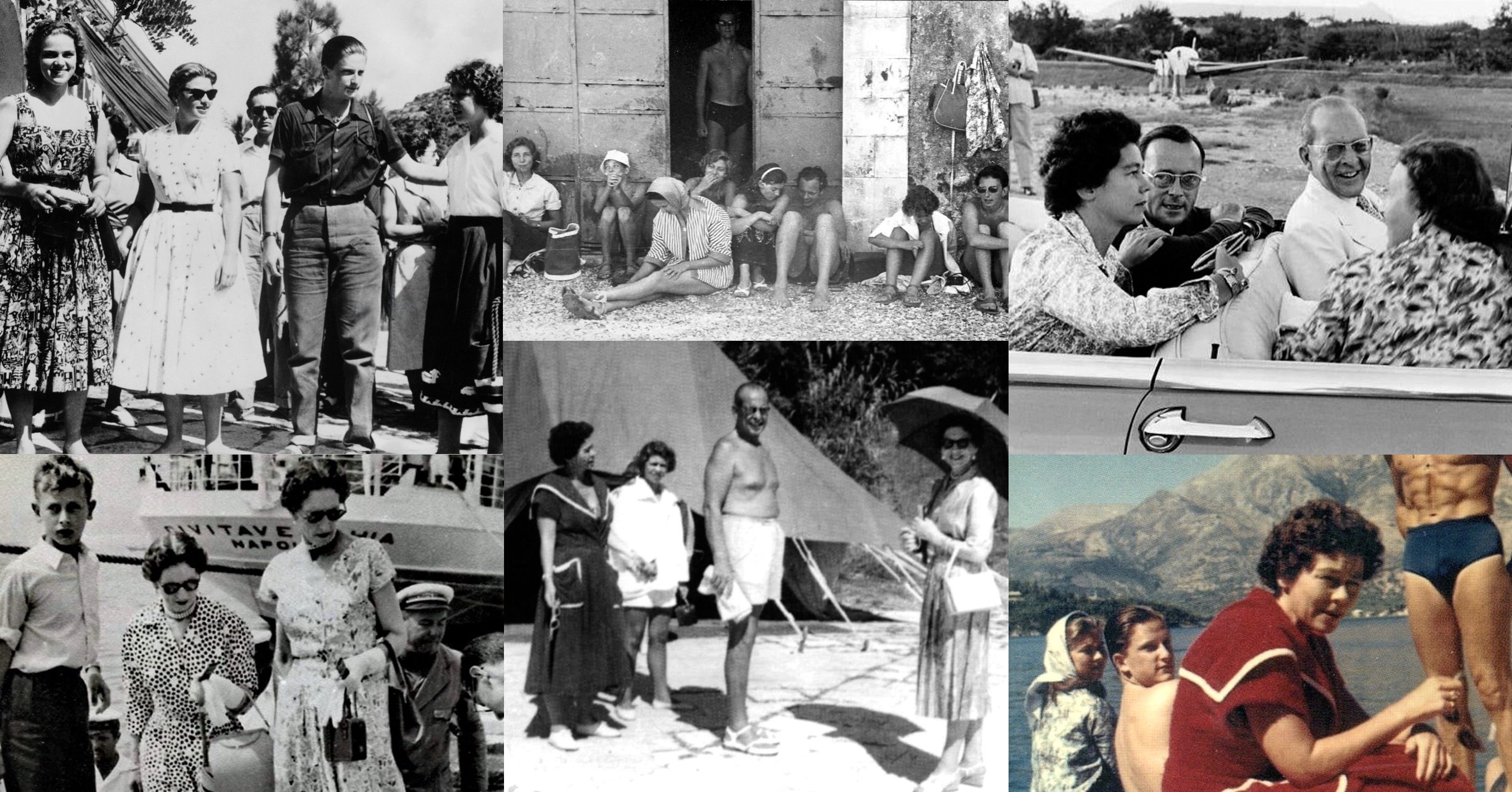
Two Kings and Four Queens led Ninety-Seven Royals from around Europe for the second ‘Cruise of Kings’ on the ‘Achilleus’ around the Ionian Islands in Greece, on this day in 1956, 70 years ago, following the legendary cruise on the ‘Agamemnon’ two years earlier.

The Greek royal family—who had been vacationing for a few days at the Mon Repos palace in Corfu alongside Princess Tatiana Radziwiłł (daughter of Princess Eugenie of Greece, Duchess of Castel Duino), the Count of Törring-Jettenbach (widower of Princess Elisabeth of Greece) and his son Count Hans-Veit— welcomed the Duke and Duchess of Bavaria—along with three of their children—and the Prince of Hanover (Queen Frederica’s older brother) at Corfu Airport on the evening of August 17.


The following day, the steamship “Achilleus”, docked at the port of Venice, welcomed the majority of the remaining guests, who had arrived in Corfu on the evening of August 19th. There, the Greek royal family and the guests already staying with them at the Mon Repos Palace boarded the vessel *Keraunos* to reach the * Achilleus*, boarding the latter at 7:30 PM. Amidst great enthusiasm, the Greek royal family conversed with their beloved guests before dining with them at 9:00 PM. After the meal—as was the case every subsequent evening—there was lively dancing until well past midnight. On August 22, they were joined by Prince Bertil of Sweden, and on the 24th by Queen Juliana and Prince Bernhard of the Netherlands, whose daughters—Princess Beatrix and Princess Irene—were already among the cruise guests.


Due to Egypt’s nationalization of the Suez Canal the previous month—and the resulting geopolitical tensions—excursions were more limited than on the cruise taken two years earlier. The Greek royal family and their distinguished guests swam at Mon Repos beach and Palaiokastritsa beach, as well as off the island of Madouri, which was owned by the Valaoritis family. They also visited the island of Skorpios, which was purchased in 1962 by the Greek shipowner Aristotele Onassis.


The full list of the Royal Guests:
- King Paul and Queen Frederica of Greece with their son Crown Prince Constantine and daughters Princesses Sophie and Irene of Greece.

- Queen Helen of Romania, with Princess Irene, Duchess of Aostra and her son, Prince Amedeo of Savoy, Duke of Aosta.


- Queen Juliana of the Netherlands, and her husband, Prince Bernhard, with their daughters, Princesses Beatrix and Irene of the Netherlands.
- Prince Bertil of Sweden.

- Princess Nicholas of Greece (Grand Duchess Elena Vladimirovna of Russia) with Princess Paul of Yugoslavia (Princess Olga of Greece), and her daughter Princess Elisabeth of Yugoslavia.
- Prince Michael of Greece.
- Princess Tatiana Radziwiłł (daughter of Prince Dominik Radziwiłł and Princess Eugenie of Greece)

- Archduke Andreas Salvator of Austria (son of Archduke Hubert Salvator of Austria and Princess Rosemary of Salm-Salm, and brother of Archduchess Valerie of Austria, future Margravine of Baden).
- Archduchesses Maria Ileana and Alexandra of Austria (daughters of Archduke Anton of Austria and Princess Ileana of Romania).

- Tsar Simeon II of Bulgaria and his mother Queen Giovanna of Bulgaria.
- Prince Knud of Denmark and his daughter Princess Elisabeth of Denmark.
- Prince and Princess Viggo of Denmark.


- The Countess of Paris, with her children Princes Michel and Jacques, and Princesses Isabelle, Hélène, Anne and Diane of Orléans.
- The Margrave of Baden with his wife Princess Theodora of Greece and their children Princes Max and Ludwig and Princess Margarita of Baden.

- The Duke and Duchess of Braganza.
- The Duke and Duchess of Bavaria, with their children and Princes Franz and Max-Emanuel and Princess Marie Gabrielle of Bavaria.

- Prince Eugen of Bavaria (son of Prince Konrad of Bavaria and Princess Maria Bona of Savoy-Genoa).
- The Prince of Hanover.
- Prince George Wilhelm of Hanover and his wife Princess Sophie of Greece.
- Princes Christian and Welf Heinrich of Hanover.
- The Prince of Hesse and by Rhine.

- The Landgrave of Hesse with his children Princes Moritz and Otto, and Princess Elisabeth of Hesse.
- Princes Karl and Rainer of Hesse and their sister Princess Dorothea of Hesse.
- The Prince of Hohenlohe-Langeburg and his wife Princess Margarita of Greece, with their children, Princes Kraft and Andreas, and Princess Beatrix of Hohenlohe-Langenburg.
- Prince Max-Emanuel of Hohenlohe-Langeburg (son of Prince Maximilian Egon of Hohenlohe-Langenburg and the Marquesa de Belvís de las Navas, and brother of Prince Alfonso of Hohenlohe-Langeburg).


- Princess Anne, Duchess of Aosta and her daughter, Princess Maria Cristina of Savoy-Aosta.
- Prince Christian Ludwig of Mecklenburg-Schwerin and his wife Princess Barbara of Prussia with his sister, Princess Thyra of Mecklenburg-Schwerin.
- Prince Peter of Schleswig-Holstein and his wife Princess Marie Alix of Schaumburg-Lippe with his sister, Princess Marie Alexandra of Schleswig-Holstein.

- Prince Friedrich Ferdinand of Schleswig-Holstein and his wife Princess Anastasia of Mecklenburg-Schwerin.
- Count Charles-Theodore of Törring-Jettenbach (widower of Princess Elisabeth of Greece), with his son Count Hans Veit of Törring-Jettenbach.
- The Duke and Duchess of Württemberg, accompanied by their children, Dukes Ludwig and Carl and Duchesses Helene, Elisabeth, Marie-Thérèse and Maria Antonia of Württemberg.
- Dukes Ferdinand Eugen, Eugen Eberhard and Alexander Eugen of Württemberg and their sisters Duchesses Margareta Luise and Sophie of Württemberg (children of Duke Albrecht Eugen of Württemberg and Princess Nadezhda of Bulgaria).

- Infante Alfonso, Duke of Galliera with his son Prince Ataúlfo of Orléans
- Prince Antoine of Bourbon-Two Sicilies.

As with the first, the official purpose of this cruise was to boost Greek tourism; in this instance, too, Queen Frederica of Greece harboured the ambition of matchmaking among young European princes and princesses. During the first cruise in 1954, Prince Alexander of Yugoslavia proposed to Princess Maria Pia of Savoy, and the two married the following year. Although no couples formed during this second cruise, several marriages took place in the following years between the young royal guests who had participated in one or both of the cruises. In 1957, Prince Henri, Count of Clermont married Duchess Marie-Thérèse of Württemberg; in 1958, Prince Antoine of Bourbon-Two Sicilies married Duchess Elisabeth of Württemberg; in 1960, Duke Carl of Württemberg married Princess Diane of Orléans; and in 1962, Prince Juan Carlos of Spain married Princess Sophie of Greece.


The Countess of Paris wrote:
But now, quickly, to Venice! For the cruise that Queen Frederika of Greece is offering for the second time to all the princes of Europe. The vaporetto dropped us off very late at our hotel in Venice, where the Prince had made a reservation, dinner included. Despite the hour, my inner ant awoke: while the children had been nibbling throughout the journey, I forced them—much to the grumbling of the staff—it was nearly eleven o’clock at night, to devour a full meal! My little birds were terribly embarrassed by my pettiness and my power play in the kitchens. “What’s paid for must be eaten!” I apparently kept repeating.
The next day we celebrated Helen’s feast day, and after a mass in honor of her patron saint, we went to mill about on the embarkation quay. Isa, who was supposed to leave with us, still hasn’t arrived… I’ve also learned that, because of the Suez Crisis, Henri and François are confined to their units. Due to the situation in Algeria, the Prince, too, has to disband, much to the disappointment of Queen Frederika of Greece. Finally arriving, seemingly out of nowhere, Isabelle appears at the last minute, beaming, on the embarkation quay. I’ll always see her, in her summer dress, tightly cinched at the waist, wearing ballet flats, walking towards us with her dancer’s gait… The Suez Crisis and the internal situation in Greece demanded a certain discretion, and so we set sail for a cruise. Almost motionless, a far cry from the ambitious itinerary of the “Agamemnon,” which had previously revealed to us the enchantment of the Greek islands. While we may have lost a bit of the tourist appeal, the cruise on the “Achi-leos” greatly contributed to bringing all these princes closer together, as they had first met on the “Aga-memnon.”
Newcomers on this second edition of the royal cruise were Jacques and Michel, my twins, and Amédéo of Savoy-Aosta, whom we call Déo, my future son-in-law… These three rascals, who were almost fifteen, quickly became popular, and no one could challenge their monopoly on mischief.
Every late afternoon, an extraordinary commotion would take hold of the ship, especially on the lower deck, where the younger passengers’ cabins were located. The young ladies would besiege the linen rooms, begging for their long, flowing evening gowns to be pressed as quickly as possible. What a boon for the boys! They took full advantage of the situation to play all sorts of pranks in the girls’ cabins. On this level of the second deck, there were no private bathrooms, and to take a bath, you had to leave your cabin. Our infernal trio’s favorite trick was to crouch in certain corridors to spy on their favorite creatures, including Elisabeth of Yugoslavia, who was taking the plunge in her birthday suit.
Before arriving in Corfu, the King of Greece, the Queen, and their children went out to sea to meet us and be by our side when the ship anchored opposite the sovereigns’ private beach and harbor, not far from their small summer palace.
We were staying on board but frequently visited the royal residence. It involved crossing a park that would have delighted even the most ardent botanist with little interest in Mediterranean flora. The King and Queen traveled around this magnificent and very steep place in quirky little electric cars. They came and went along the steep paths, lined with all kinds of rare conifers, bushes, fragrant flowers, strawberry trees, and centuries-old olive trees. Every day, they joined us on the beach, enclosed by a large shark net, where we frolicked for hours in the sun. To mix things up, we also ventured inland for long excursions, in small groups or large, boisterous bands, always with a picnic in tow. Sometimes I would set off alone to explore the Greek countryside, which boasts a whole palette of bluish-grey-greens and whose leaden soil shimmers pink with the slightest drop of rain.
Other times, Berthold de Baden and Toto Torring accompanied me on long hikes in the mountains. One day, we discovered a small hermitage with dazzling white walls, and we sat on its flagstones in the setting sun, leaning against the still-warm stones. The pines whispered in the cool breeze, and far off in the distance, at the back of the bay, we could see our boat, with its swarm of people around it. We congratulated ourselves on having set sail, and inwardly, I was greatly amused to see my two companions, taking turns inventing a thousand excuses to be alone with me.
“Try to find out what that strange building over there is!” one of them would say. Without moving an inch, the other would reply, “I know there’s a magnificent view nearby… Can you go and see for yourself?” Yet, I myself felt so comfortable between the two of them, equally affectionate and gifted at conversations that shared their unique views on art and existence. As soon as we returned to the harbor, the family throng closed in on us. Unintentionally imitating each other, and notwithstanding the close friendship that united them, my two cousins would then discreetly confide in me: “Ah! What a pity that there was no way to get rid of him.”
Thank You to Antonio Orefice for sharing this article with us, with information graciously compiled by Nikos Papakonstantinou!
Royal Cruise on Agamemnon in 1954


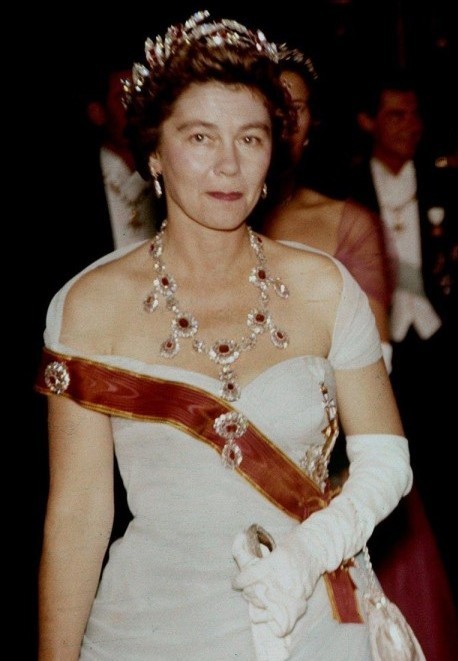
Pearl and Diamond Necklace Tiara