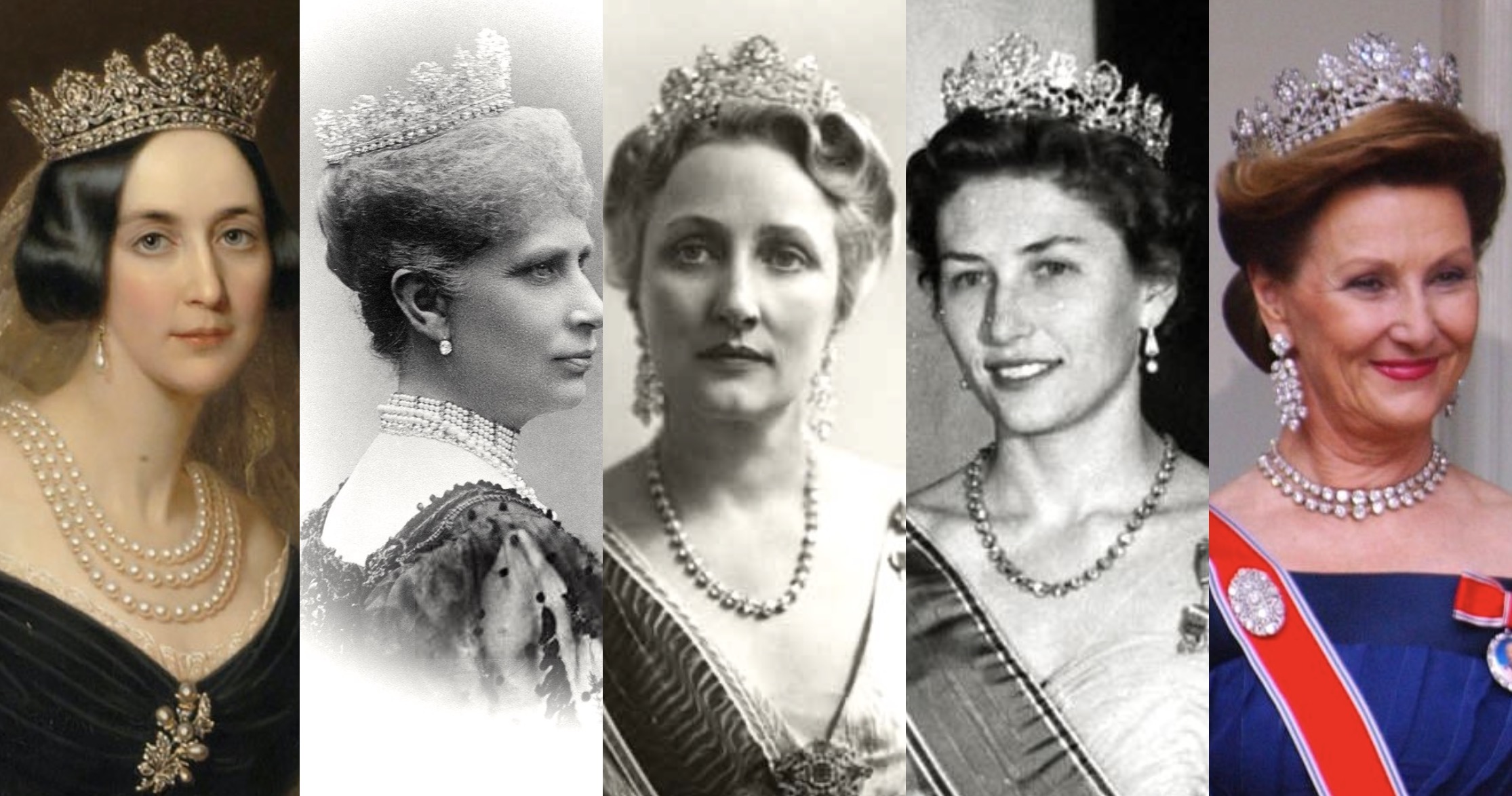
Today marks the 170th Anniversary of the Birth of Queen Lovisa of Denmark, who was born on this day in 1851! The Swedish Princess who became the Queen of Denmark and the mother of Danish and Norwegian Kings, Queen Lovisa had a legendary jewellery collection and to mark the anniversary, we are featuring the spectacular Queen Josefina’s Diamond Tiara that has passed through the Swedish, Danish, and Norwegian Royal Families for the past 200 years!
Pearl Poiré Tiara | Queen Josefina’s Diamond Tiara | Danish Ruby Parure | Crown Diamond Parure | Pink Topaz Parure | Danish Diamond Rivière | Pearl Poire Brooch | Diamond Brooches | Antique Diamond Parure | Antique Diamond Earrings | Pearl Brooch

But first, lets learn about Queen Lovisa! The only surviving child of King Charles XV of Sweden and Norway and Princess Louise of the Netherlands, Princess Lovisa could not be recognized as the Heir to the Thrones of Sweden and Norway, which went to her uncle, but grew up at the centre of the Swedish Royal Court in Stockholm. In 1869, Princess Lovisa married Crown Prince Frederick of Denmark, the eldest son and Heir of King Christian IX of Denmark who was also the brother of King George I of Greece, Empress Maria Feodorovna of Russia, and Queen Alexandra of the United Kingdom. The couple had eight children, including King Christian X of Denmark, King Haakon VII of Norway, and Princess Ingeborg of Sweden, and while Crown Princess Lovisa/Louise (as she was known in Denmark) was popular with the Danish public, she was not well-liked among the extended Danish Royal Family. During her decades as Crown Princess, she founded many charitable and religious organizations and rafter the death of her parents, remained close with the Swedish Royal Family, especially when her daughter, Princess Ingeborg, married her cousin, Prince Carl. When her son, Prince Carl, was appointed King of an independent Norway in 1905, it fulfilled her King Charles XV’s wish to see his descendent on one of his thrones. Crown Prince Frederick finally succeeded to the Danish Throne in 1906, and the new Queen Louise continued her patronage of art, literature and charity during their short reign until 1912, and afterwards as a widow, the Queen Dowager built Egelund Slot, where she resided until her death in 1926, a few months before her 75th birthday. Her descendents include Queen Margrethe II of Denmark, King Harald V of Norway, Queen Anne-Marie of Greece, King Philippe of Belgium, and Grand Duke Henri of Luxembourg.

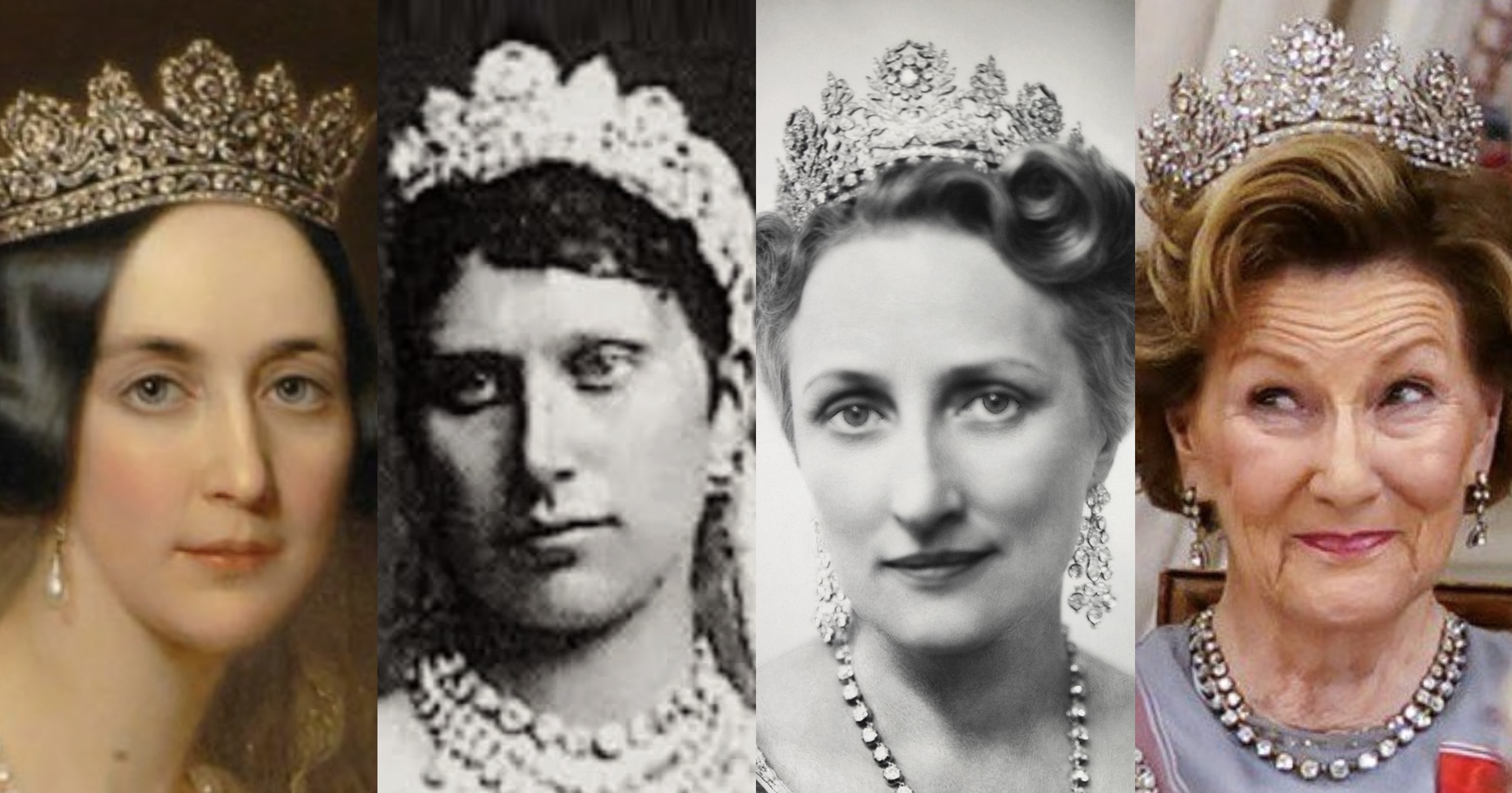
Composed of floral motifs and laurel wreaths depicted in diamonds and mounted in gold and silver, the Diamond Tiara originates from the reign of Emperor Napoleon, and was likely created by the Court Jeweller Nitot.

For several years, it was thought that this Tiara belonged to Queen Désirée of Sweden but historian Trond Noren Isaksen has revealed that the Tiara originally belonged to Empress Joséphine of the French, who left the Tiara to her namesake granddaughter, Queen Josefina of Sweden and Norway.
Before my book on the Norwegian royal tiaras and the women who have worn them, «Ingrid Alexandras arv», was published in 2023, the Queen wrongly believed that the tiara first belonged to the French-born Queen Désirée, the consort of King Carl XIV Johan. But as I pointed out in 2007, there is no evidence that Désirée owned it and it was worn by her daughter-in-law, Queen Josephine, while Désirée was still alive. Princess Astrid told me that she only knew that it had belonged to Queen Josephine but not from where she got it.


Princess Josefina likely wore the Diamond Tiara at her Wedding to Crown Prince Oscar of Sweden in 1823, and was portrayed wearing the Tiara as Queen of Sweden in a State Portrait by Friedrich Dürck in 1849.


After Queen Josefina’s death in 1876, the Diamond Tiara was left to her granddaughter, Princess Lovisa, by then Crown Princess of Denmark, who had brought so many jewels to Denmark from Sweden that “if it was all laid out on a card table, you could not see the fabric underneath”. Despite the legendary jewellery collection, Queen Lovisa was not depicted wearing many jewels, an exception being this Diamond Tiara, which was worn in several portraits.


Queen Lovisa also notably wore Queen Josefina’s Diamond Tiara for Laurits Tuxen’s State Portrait in 1911-1912, when it was paired with the Danish Crown Diamond Parure.


Queen Louise left Queen Josefina’s Diamond Tiara to her youngest son, Prince Gustav, who remained unmarried and loaned the Tiara to to his sister, Princess Thyra, also unmarried, for the Wedding Gala of Crown Prince Frederik of Denmark and Princess Ingrid of Sweden in 1935, King Christian X’s Silver Jubilee in 1937, and King Gustav V’s 80th Birthday in 1938.

Prince Gustav also loaned Queen Josefina’s Diamond Tiara to his niece, Crown Princess Märtha of Norway, for the Wedding of Prince Christian of Schaumburg-Lippe and Princess Feodora of Denmark in 1937.


After Prince Gustav’s death in 1944, Queen Josefina’s Diamond Tiara was inherited by Crown Princess Märtha, daughter of his sister, Princess Ingeborg of Denmark and Sweden, and the daughter-in-law of his brother, King Haakon VII of Norway, who claimed the piece upon the Royal Family’s return to Europe in 1945, following the Second World War and wore the Tiara for a series of Official Portraits.
In his will, Prince Gustav expressed a desire that these should be considered «family jewels» and that Crown Princess Märtha should leave these to her son, the present King, and that they would thereafter pass from king to king.


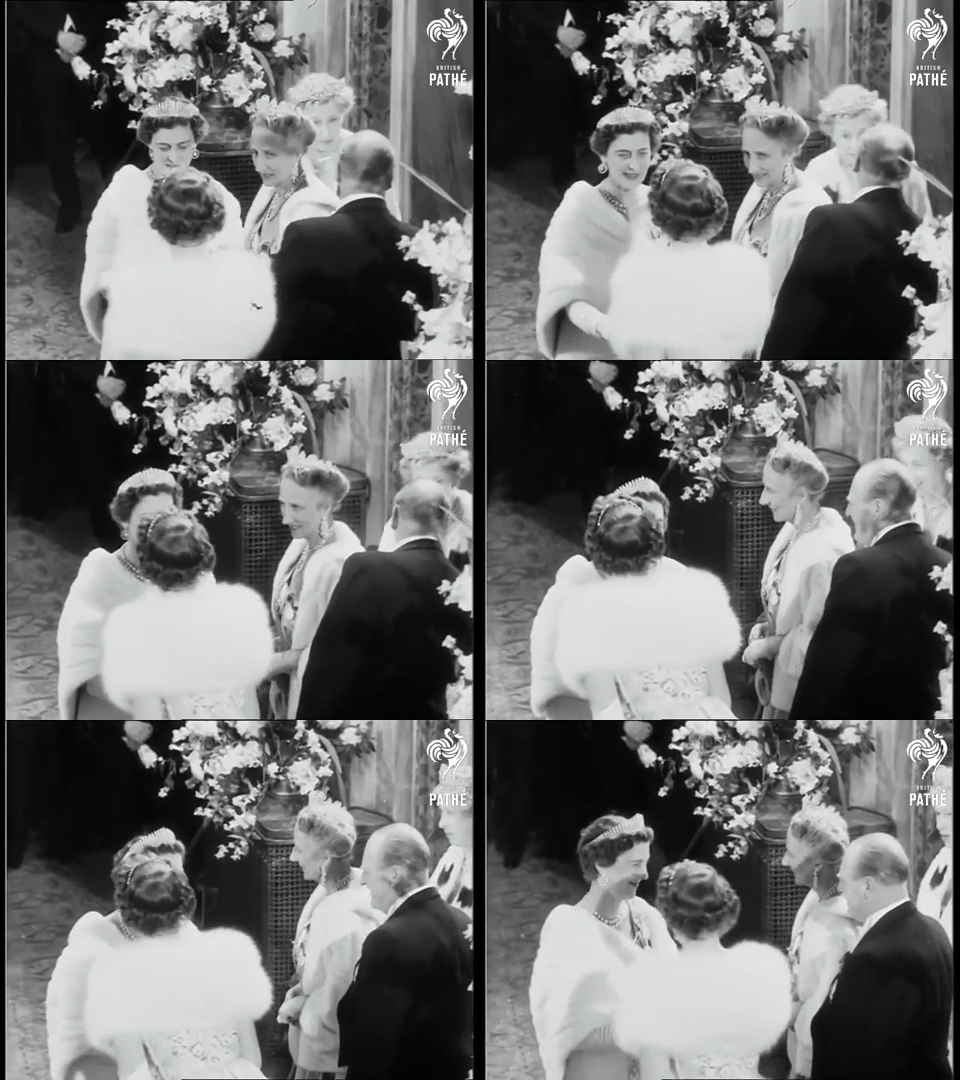

Over the next few years, Crown Princess Märtha frequently wore Queen Josefina’s Diamond Tiara, notably for King Gustaf V’s 90th Birthday, Queen Juliana’s Inauguration Gala in 1948 and the Coronation Gala at Covent Garden in 1953, shortly before her own untimely death in 1954.


After Crown Princess Märtha’s death, her daughter, Princess Astrid became the leading lady of the Norwegian Royal Court first for her grandfather, King Haakon VII, and then also for her father, King Olav V, wearing Queen Josefina’s Diamond Tiara for the British State Visit to Norway in 1955, Crown Prince Harald’s 21st Birthday in 1957, and the Danish State Visit to Norway in 1960 among a few other occasions.


Almost a decade later, the newlywed Crown Princess Sonja wore Queen Josefina’s Diamond Tiara with Queen Alexandra’s Diamond Pendant Earrings for her first series of official portraits.


Crown Princess Sonja regularly wore Queen Josefina’s Diamond Tiara with notable appearances during the the Icelandic State Visit to Norway in 1971, the Swedish State Visit to Norway in 1974, the Wedding of Princess Christina of Sweden in 1974, a Military Gala in Oslo in 1975.


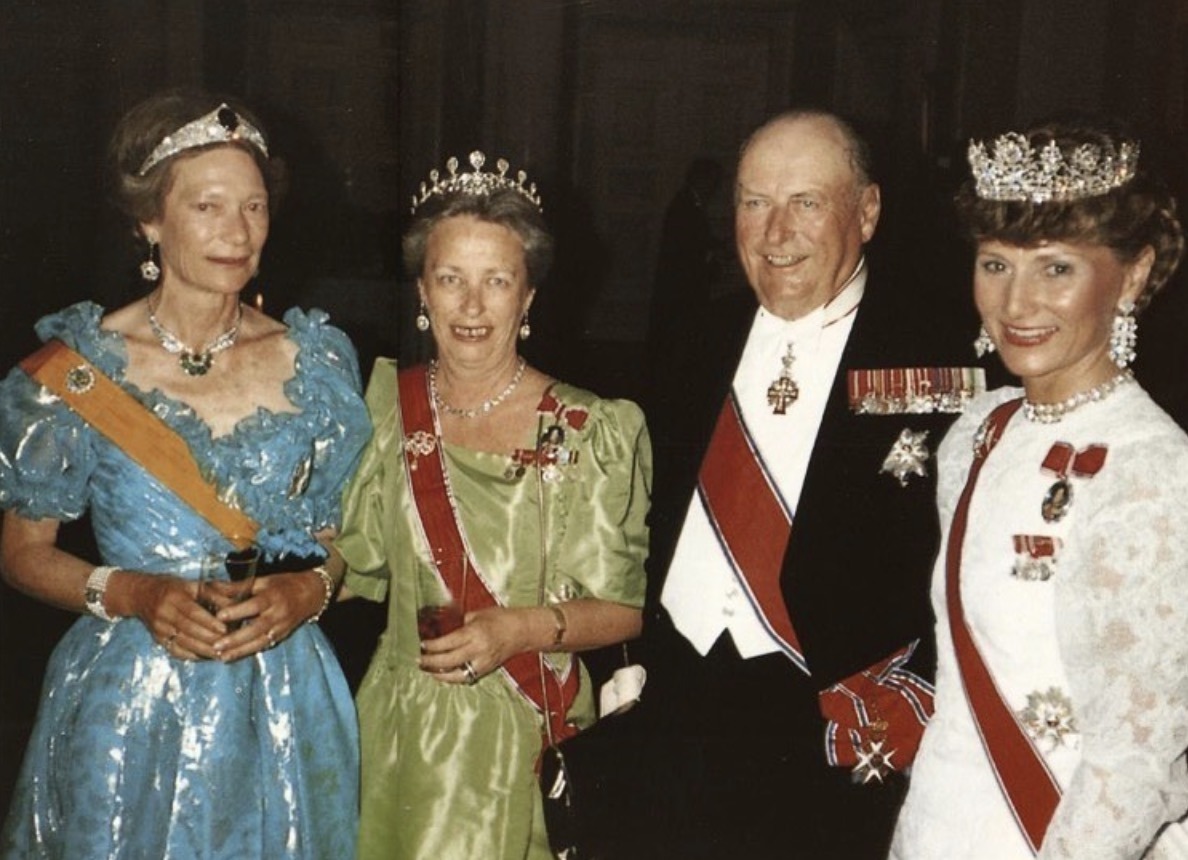


Crown Princess Sonja also notably wore Queen Josefina’s Diamond Tiara for the Spanish State Visit to Norway in 1982, King Olav’s 80th Birthday Gala in 1983, Princess Märtha Louise’s Confirmation in 1986, Crown Prince Harald’s 50th Birthday in 1987, and King Olav’s 85th Birthday in 1988.


In the 1990s, Queen Josefina’s Diamond Tiara was worn by Queen Sonja for Crown Prince Haakon’s 18th Birthday in 1991, Norwegian State Visit to Denmark in 1991, Danish State Visit to Norway in 1992, King Harald and Queen Sonja’s Silver Wedding Anniversary in 1993, and the Norwegian State Visit to Britain in 1994.


Queen Sonja also wore Queen Josefina’s Diamond Tiara for Queen Margrethe’s 60th Birthday in 2000, the Norwegian State Visit to Japan in 2001, the Wedding of Princess Märtha Louise of Norway in 2002, the Wedding Gala of Crown Prince Frederik of Denmark in 2004, and the Norwegian State Visit to Britain in 2005.


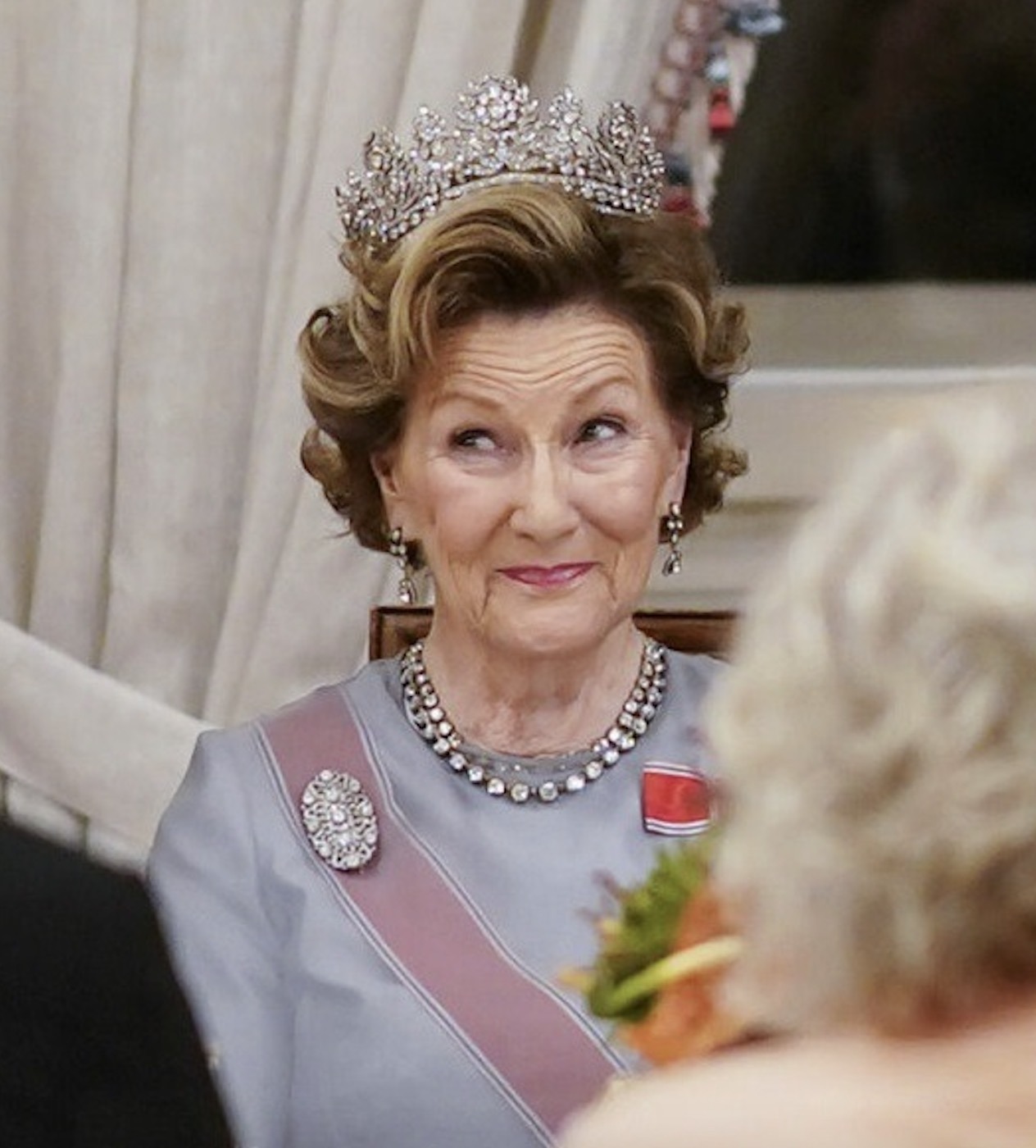


After only a handful of appearances in the last decade, Queen Sonja wore Queen Josefina’s Diamond Tiara for Stortingsmiddag in 2018 in 2021, the Italian State Visit to Norway in 2023 and most recently the French State Banquet at the Royal Palace of Oslo last year. There is no doubt we will see this magnificent Royal Heirloom for years to come!
Pearl Poiré Tiara
Queen Josefina’s Diamond Tiara
Danish Ruby Parure
Danish Diamond Rivière
Pearl Poire Brooch
Danish Crown Diamond Parure
Pink Topaz Parure
Pearl Brooch
The Jewels of the Queens of Denmark
The Norwegian Emerald Parure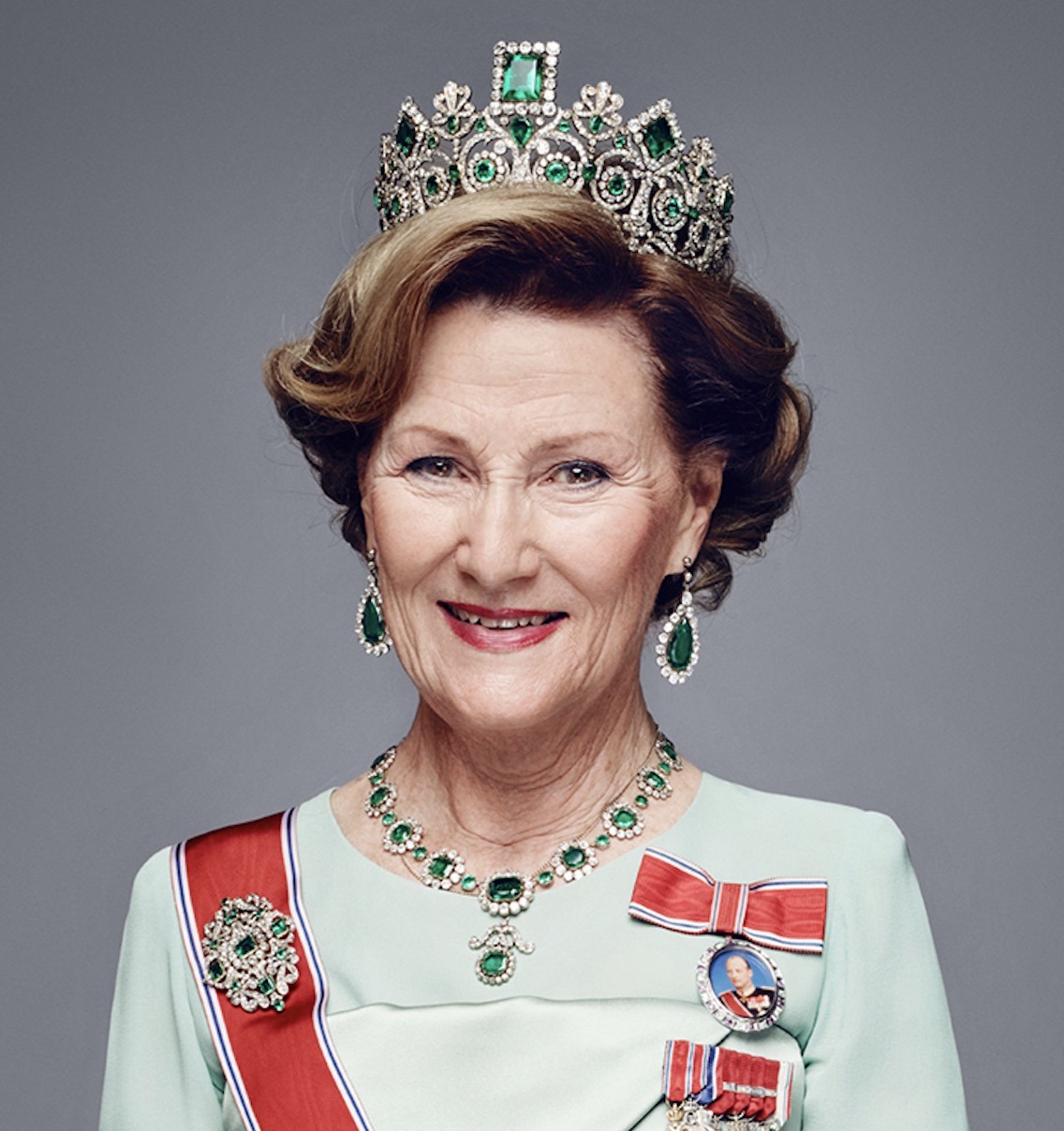
Queen Josefina’s Diamond Tiara
Queen Maud’s Pearl Tiara
Queen Alexandra’s Diamond Circlet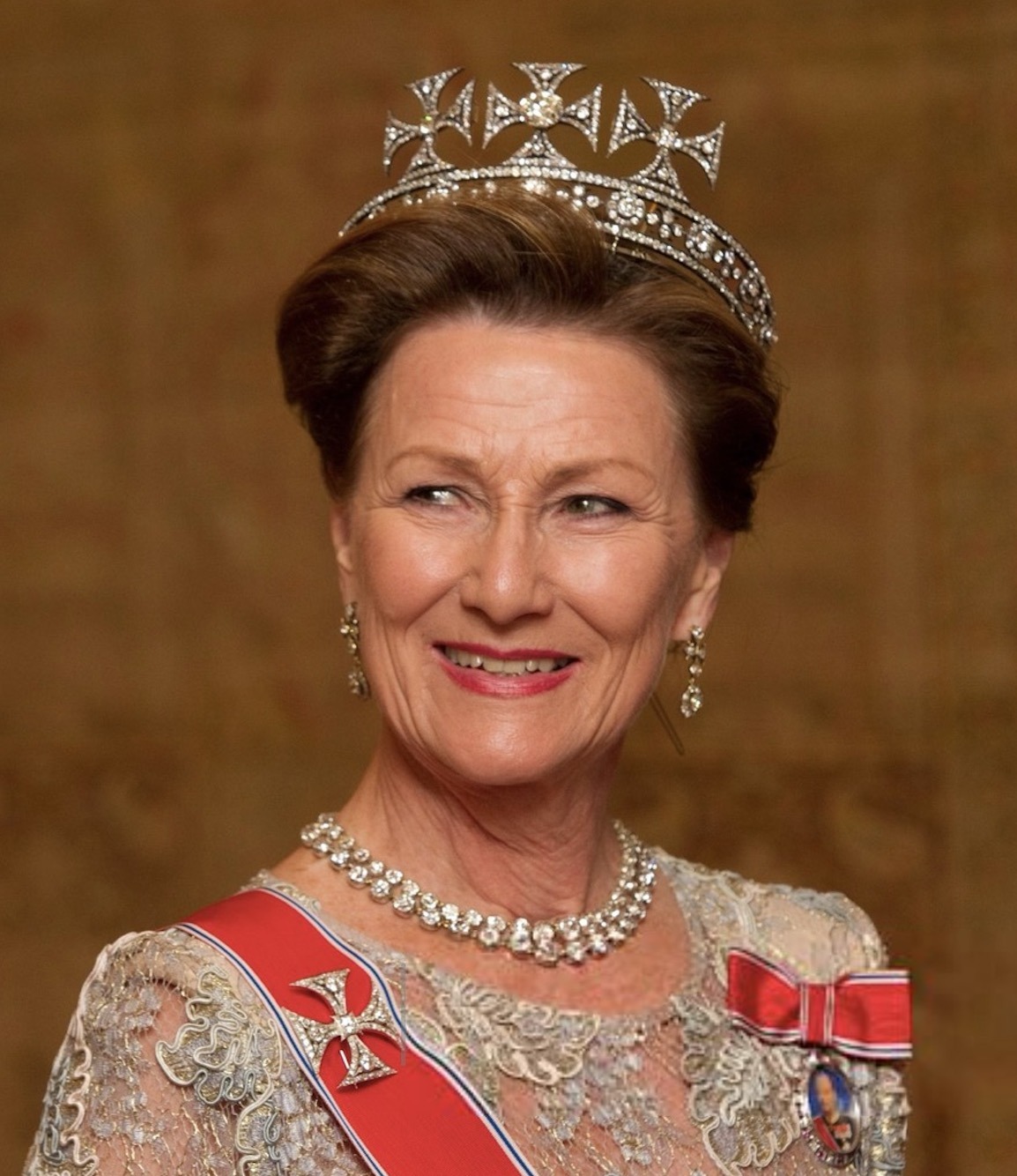
Diamond Daisy Bandeau
Norwegian Amethyst Parure
Vifte Tiara
Princess Ingeborg’s Boucheron Pearl Circle Tiara
King Olav’s Gift Tiara
Modern Gold Tiara
Queen Alexandra’s Turquoise Circlet
Vasa Tiara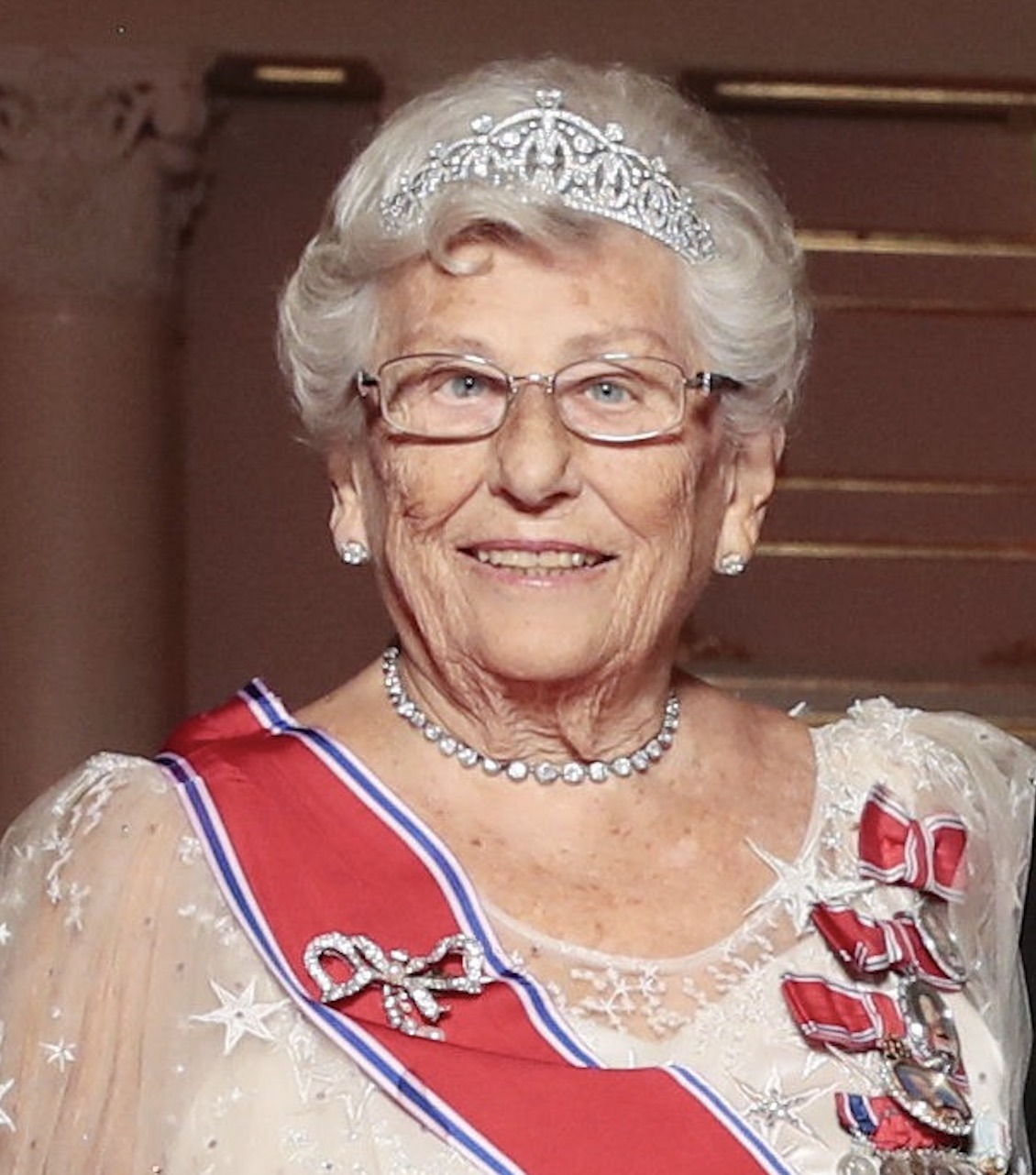
Queen Maud’s Diamond Tiara
Princess Astrid’s Ruby Aigrette Tiara
Princess Astrid’s Gold Bandeau Tiara
Queen Sophia’s Diamond Bracelet Bandeau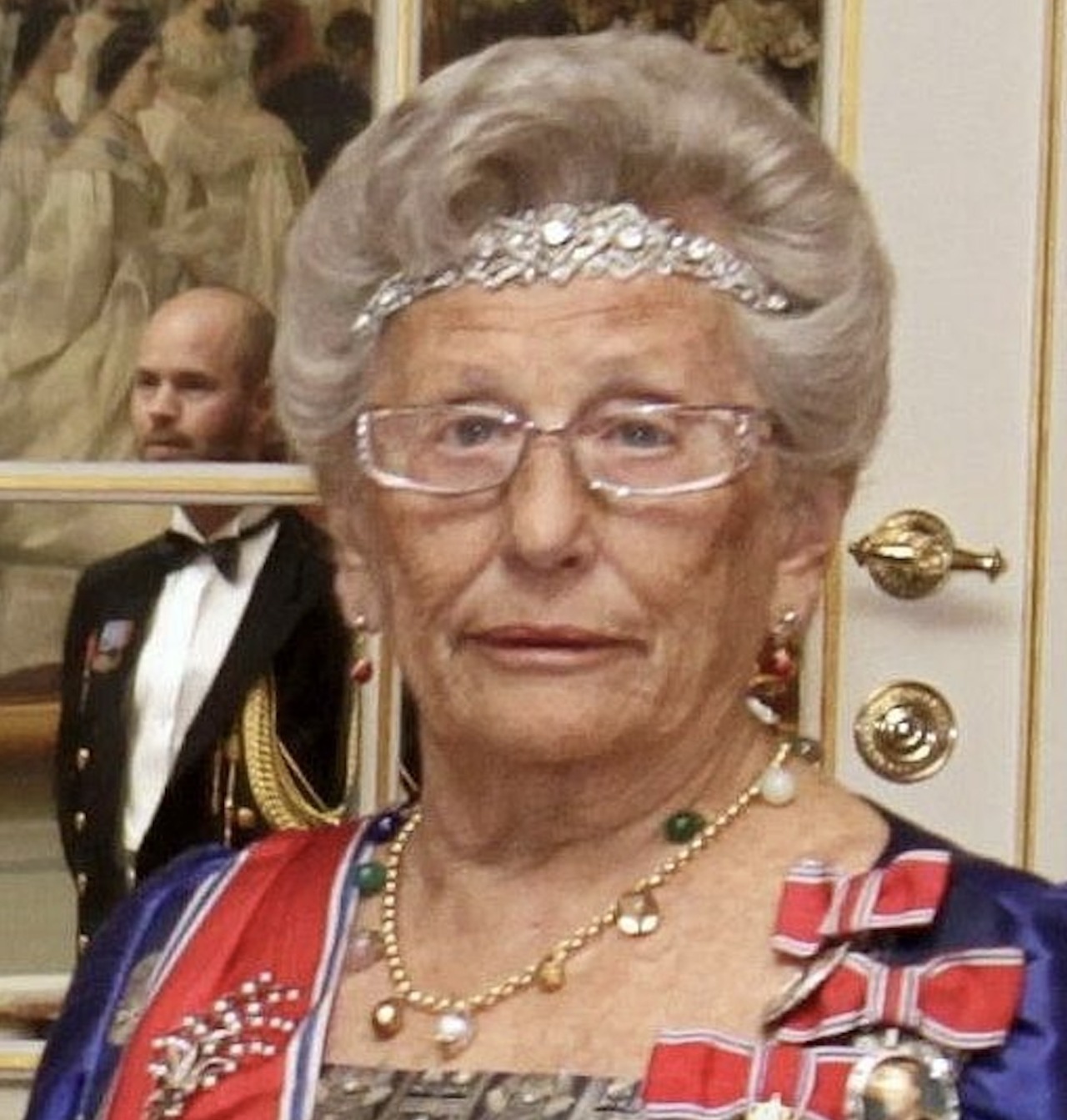
Princess Ingeborg’s Boucheron Pearl Tiara
Ruby Heart Pendant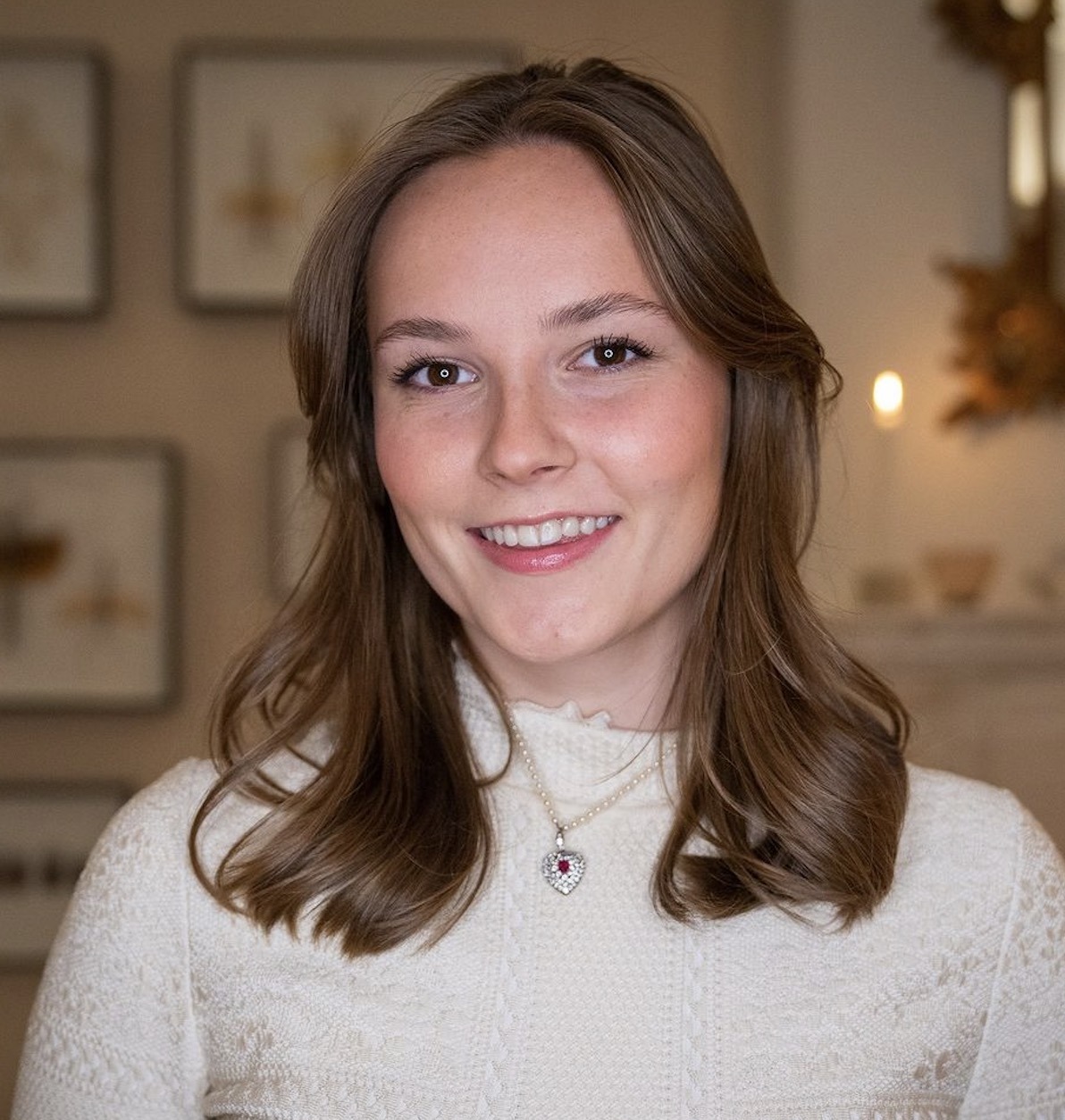
Crown Princess Märtha’s Pearl Earrings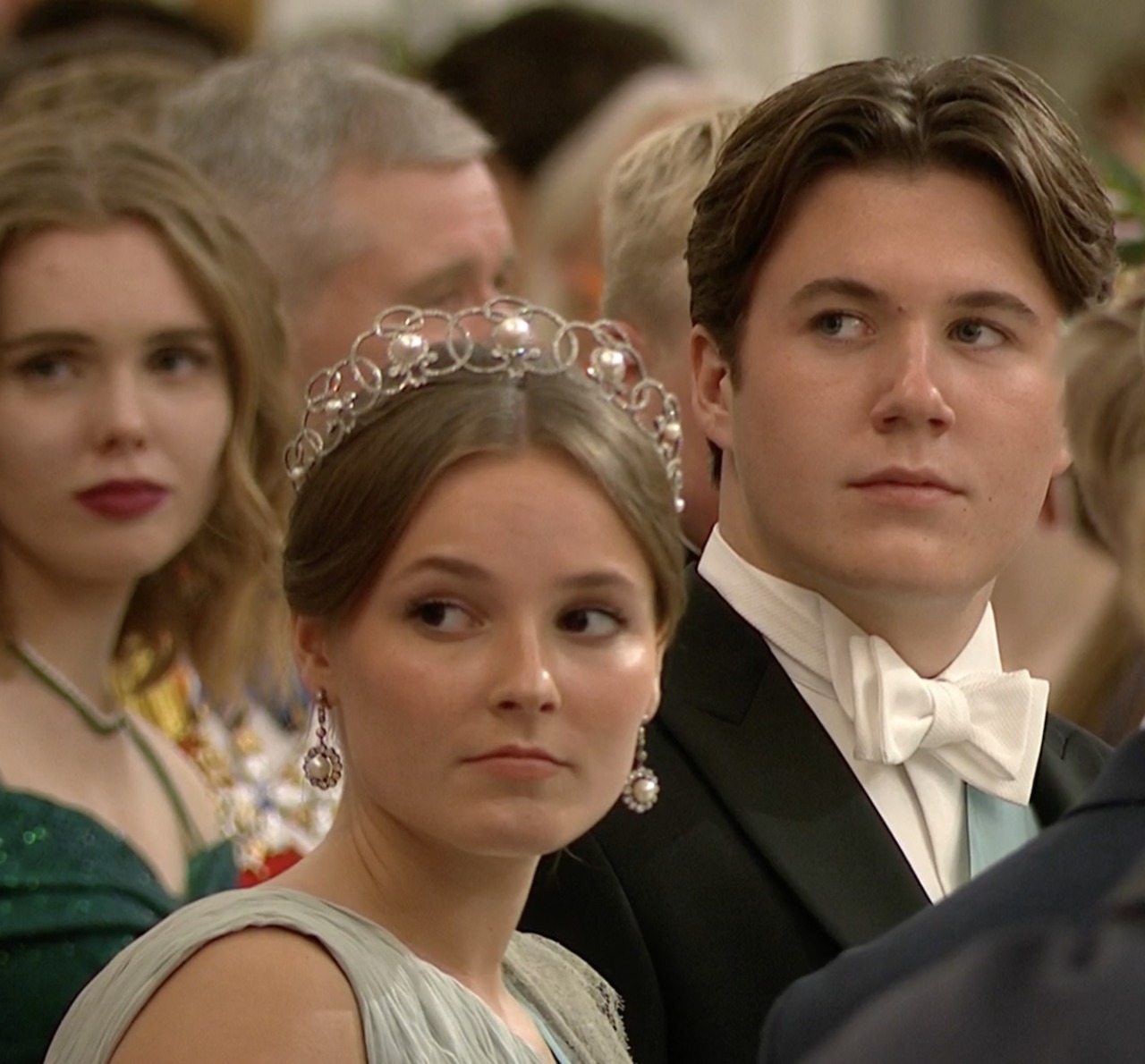
Queen Maud’s Order of Victoria and Albert Bracelet
Art Deco Diamond Bracelet
Pearl Pendant Earrings
The Danish Emerald Parure
The Danish Pearl Poiré Tiara
The Danish Ruby Parure
Danish Diamond Bandeau
Wedding Tiara
Diamond Necklace Tiara
Midnight Tiara

Danish Diamond Rivière
‘Belle Epoque’ Diamond Earrings
Duchess of Leuchtenberg’s Pearl Bracelet
Wedding Earrings

Diamond Fringe Earrings

Aquamarine Jewels
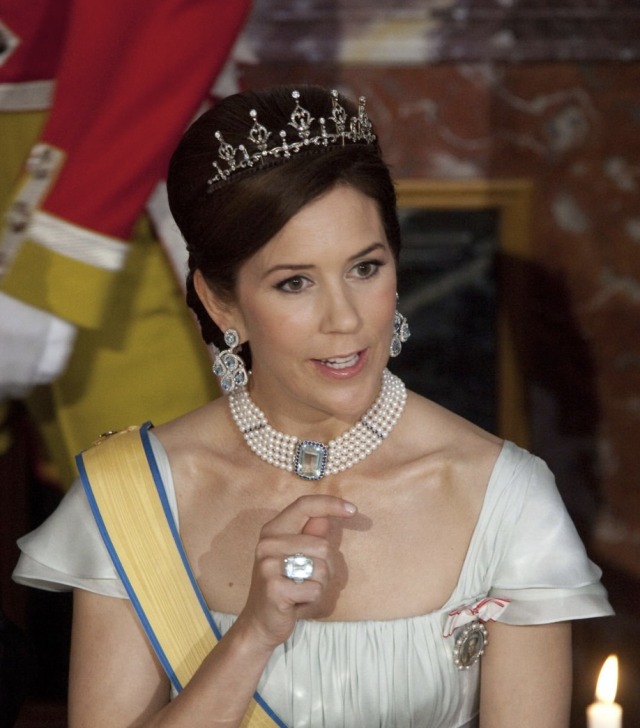
Amethyst Earrings
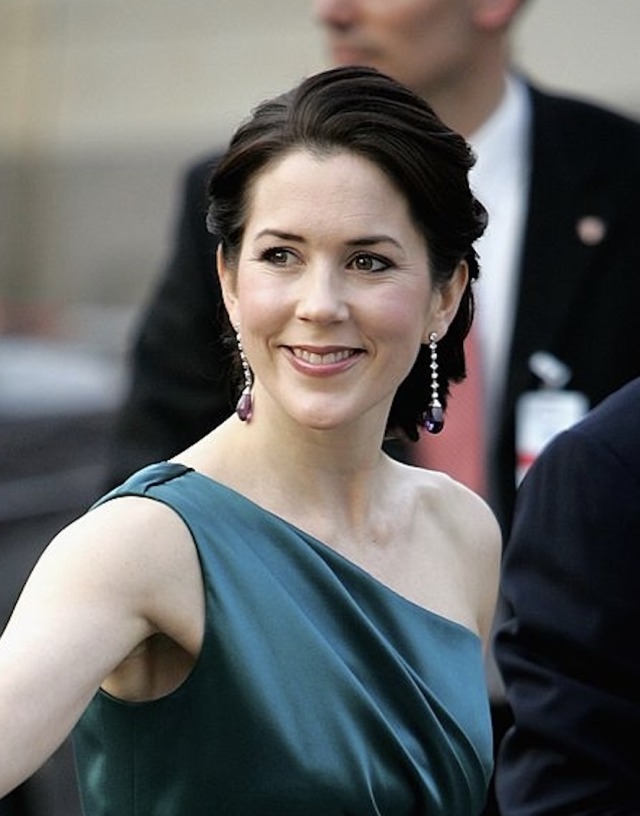
Queen Josefina’s Diamond Brooches
Connaught Sapphire Brooch
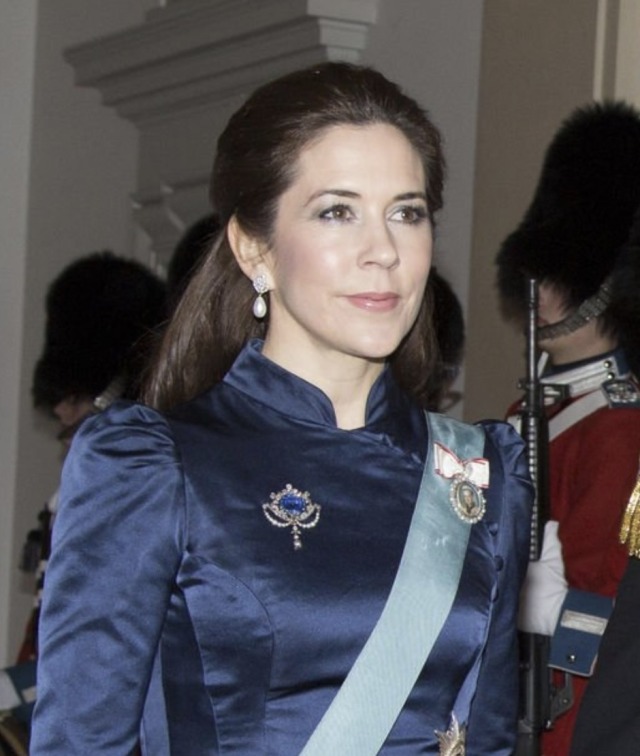
Queen Louise of Sweden’s Engagement Bracelet 
Diamond Flower Brooch
Antique Turquoise Parure
Diamond Flower Earrings
Ole Lynggaard Brooch
Click HERE to see the full version of this article!
Pearl Poiré Tiara | Danish Ruby Parure | Danish Crown Diamond Parure | Pearl Poire Brooch | Diamond Brooches | Antique Diamond Parure
Embed from Getty Images
But first, lets learn about Queen Lovisa! The only surviving child of King Charles XV of Sweden and Norway and Princess Louise of the Netherlands, Princess Lovisa could not be recognized as the Heir to the Thrones of Sweden and Norway, which went to her uncle, but grew up at the centre of the Swedish Royal Court in Stockholm. In 1869, Princess Lovisa married Crown Prince Frederick of Denmark, the eldest son and Heir of King Christian IX of Denmark who was also the brother of King George I of Greece, Empress Maria Feodorovna of Russia, and Queen Alexandra of the United Kingdom. The couple had eight children, including King Christian X of Denmark, King Haakon VII of Norway, and Princess Ingeborg of Sweden, and while Crown Princess Lovisa/Louise (as she was known in Denmark) was popular with the Danish public, she was not well-liked among the extended Danish Royal Family. During her decades as Crown Princess, she founded many charitable and religious organizations and rafter the death of her parents, remained close with the Swedish Royal Family, especially when her daughter, Princess Ingeborg, married her cousin, Prince Carl. When her son, Prince Carl, was appointed King of an independent Norway in 1905, it fulfilled her King Charles XV’s wish to see his descendent on one of his thrones. Crown Prince Frederick finally succeeded to the Danish Throne in 1906, and the new Queen Louise continued her patronage of art, literature and charity during their short reign until 1912, and afterwards as a widow, the Queen Dowager built Egelund Slot, where she resided until her death in 1926, a few months before her 75th birthday. Her descendents include Queen Margrethe II of Denmark, King Harald V of Norway, Queen Anne-Marie of Greece, King Philippe of Belgium, and Grand Duke Henri of Luxembourg.
Composed of floral motifs and laurel wreaths depicted in diamonds and mounted in gold and silver, the Tiara likely originates from the reign of Emperor Napoleon, though an erroneous provenance often claims that it was a wedding gift to Désirée Clary (Napoleon’s former fiancee) and General Jean-Baptiste Bernadotte (who later became King Karl XVI Johan of Sweden and Norway) in 1798. First depicted on Queen Josefina of Sweden and Norway, who was the granddaughter of Napoleon’s Empress Josephine, the tiara was likely a Wedding Gift to her from her parents, the Duke and Duchess of Leuchtenberg, or in-laws, King Karl XVI Johan and Queen Desiree. Princess Josefina likely wore the Tiara at her Wedding to Crown Prince Oscar of Sweden in 1823, and was portrayed wearing the Tiara as Queen in a State Portrait by Friedrich Dürck in 1849.
After Queen Josefina’s death in 1876, the Diamond Tiara was left to her granddaughter, Princess Lovisa, who was then Crown Princess of Denmark, who had brought so many jewels to Denmark from Sweden that “if it was all laid out on a card table, you could not see the fabric underneath”. Despite the legendary jewellery collection, Crown Princess and later Queen Lovisa was not depicted wearing many jewels, an exception being this Diamond Tiara, which was worn in many portraits, including Laurits Tuxen’s State Portrait in 1911-1912, when it was paired with the Danish Crown Diamond Parure.
 Embed from Getty Images
Queen Louise left Queen Josefina’s Diamond Tiara to her youngest son, Prince Gustav, at the time of her death in 1926, who was unmarried and loaned the Tiara to to his sister, Princess Thyra, also unmarried, for the Wedding Gala of Crown Prince Frederik of Denmark and Princess Ingrid of Sweden in 1935, King Christian X’s Silver Jubilee in 1937, and King Gustav V’s 80th Birthday in 1938.
After Prince Gustav’s death in 1944, Queen Josefina’s Diamond Tiara was inherited by his niece, Crown Princess Märtha of Norway, daughter of his sister, Princess Ingeborg of Denmark and Sweden, and the daughter-in-law of his brother, King Haakon VII of Norway. Crown Princess Märtha, who had earlier worn the Tiara at the Wedding of Prince Christian of Schaumburg-Lippe and Princess Feodora of Denmark in 1937, claimed the piece upon the Royal Family’s return to Europe in 1945, following World War II, and because Queen Maud’s jewels remained in England throughout the Norwegian Royal Family’s exile during WWII, and were only reclaimed during a visit for the Queen’s Coronation in 1953, Queen Josefina’s Diamond Tiara along with the Napoleonic Emerald Parure, which she had been given by Princess Ingeborg to sell in case of financial difficulties during exile, became Crown Princess Märtha’s only Tiaras in the years leading up to her death, notably worn for an Official Portrait, Queen Juliana’s Inauguration Gala in 1948 and Queen Elizabeth II’s Coronation Gala at Covent Garden in 1953, which came less than a year ahead of her own untimely death from cancer.
Embed from Getty Images
After Crown Princess Märtha’s death, her daughter, Princess Astrid became the leading lady of the Norwegian Royal Court first for her grandson, King Haakon VII, and then also for her father, King Olav V, also getting access to the Emerald Parure and Queen Josefina’s Diamond Tiara, which she wore for the British State Visit to Norway in 1955, Crown Prince Harald’s 21st Birthday in 1957, and the Danish State Visit to Norway in 1960. It was only in 1968, that the Norwegian Royal Jewellery Collection, consisting of the jewels of Queen Maud and Crown Princess Märtha, were divided up between the three siblings following the wedding of then Crown Prince Harald.
https://www.instagram.com/p/CTXr9kusrtT/
As the grandest two Tiaras in the collection, the Emerald Parure and Queen Josefina’s Diamond Tiara came to Crown Prince Harald and were worn by the then Crown Princess Sonja as the leading lady of the Norwegian Royal Family, first for a series of Official Portraits taken soon after her wedding, and then for a variety of Gala events, including the Icelandic State Visit to Norway in 1971, the Swedish State Visit to Norway in 1974, and the Wedding of Princess Christina of Sweden in 1974.
Embed from Getty Images
Embed from Getty Images
During the 1980s, Queen Josefina’s Diamond Tiara continued it’s use as the second grandest Tiara of the Norwegian Royal Family, being worn for a variety of Return Banquets and secondary Galas, including for the Spanish State Visit to Norway in 1982, Princess Märtha Louise’s Confirmation in 1986, and Crown Prince Harald’s 50th Birthday in 1987, a pattern which continued after the Accession of King Harald V of Norway in 1991, with Queen Josefina’s Diamond Tiara being worn atCrown Prince Haakon’s 18th Birthday in 1991, the Norwegian State Visit to Denmark in 1991, King Harland and Queen Sonja’s Silver Anniversary in 1993, and on the Iceland State Visit to Norway in 1997, among a series of events.
Embed from Getty Images
Embed from Getty Images
https://www.instagram.com/p/CF7mhRUnE9A/
Embed from Getty Images
Embed from Getty Images
Embed from Getty Images
https://www.instagram.com/p/COsVJZNHcax/

Queen Sonja has usually paired Queen Josefina’s Diamond Tiara with Queen Alexandra’s Diamond Chandelier Earrings and two diamond rivieres, and this combination was worn for Queen Margrethe’s 60th Birthday in 2000, the Norwegian State Visit to Japan in 2001, the Wedding of Princess Märtha Louise of Norway in 2002, the Wedding Gala of Crown Prince Frederik of Denmark in 2004, and the Norwegian State Visit to Britain in 2005. As State Visits and most other Gala events only have one Gala event as opposed to multiple events in days of yore, the status of Queen Josefina’s Diamond Tiara as a secondary Tiara has meant that is has been worn quite sparsely in recent years, with a recent appearance at the Stortingsmiddag in 2018 coming after a gap of many years. However, earlier this week (long after this article had been pre-written and scheduled), Queen Sonja wore the Tiara for the annual Gala Dinner for Members of Parliament (Stortingsmiddag), the first Gala event in Norway after the pandemic. With a State Visit from The Netherlands next month and two Gala events for Queen Margrethe’s Golden Jubilee, as well as a likely Gala for Princess Ingrid Alexandra’s 18th Birthday, in January, lets hope the spectacular Heirloom makes another reappearance soon!
Queen Josefina’s Diamond Tiara Is a Beautiful Tiara
Queen Josefina of Sweden and Norway was a Very Beautiful Woman
Queen Sonja of Norway Is a Stunning Woman