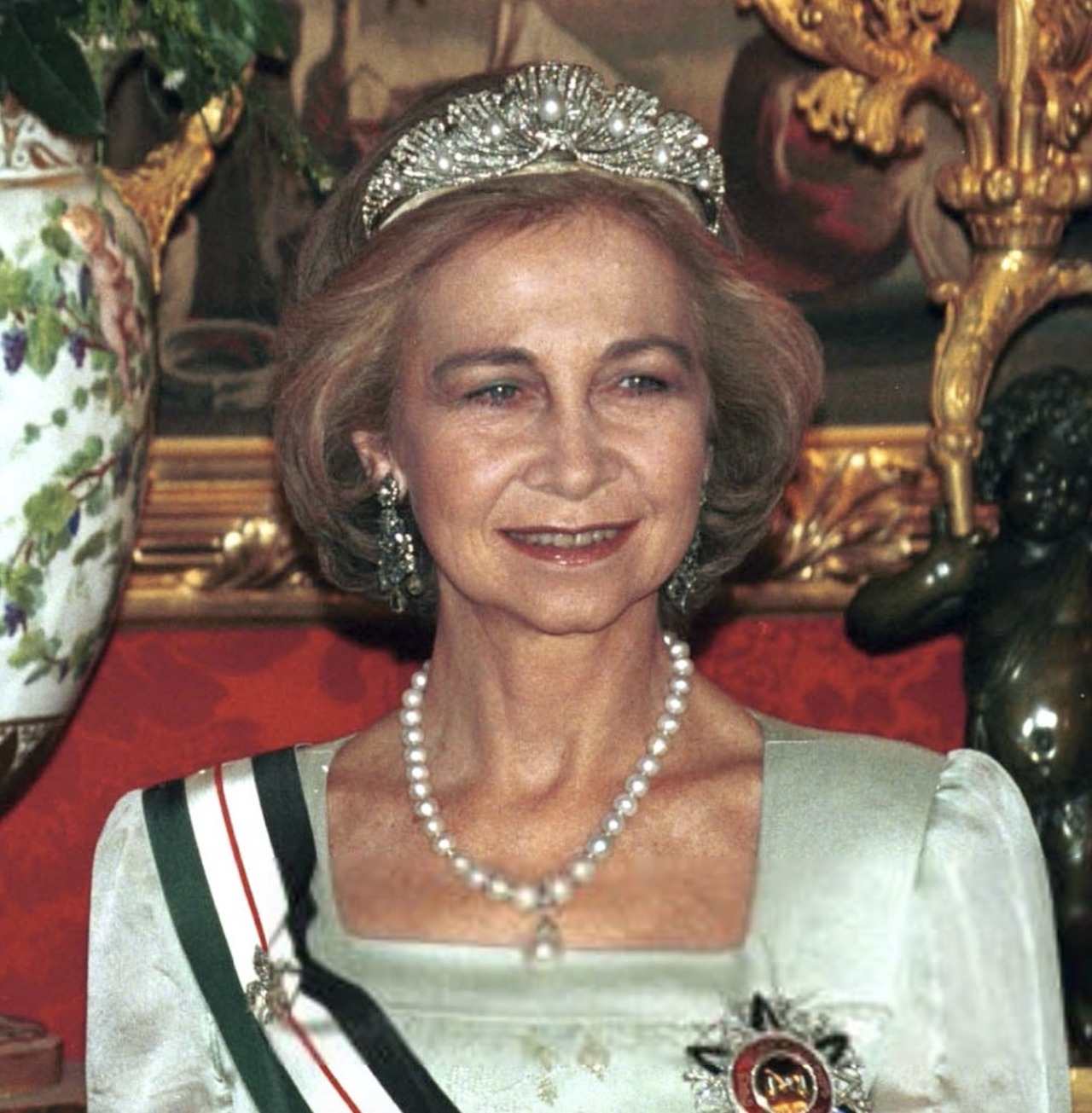
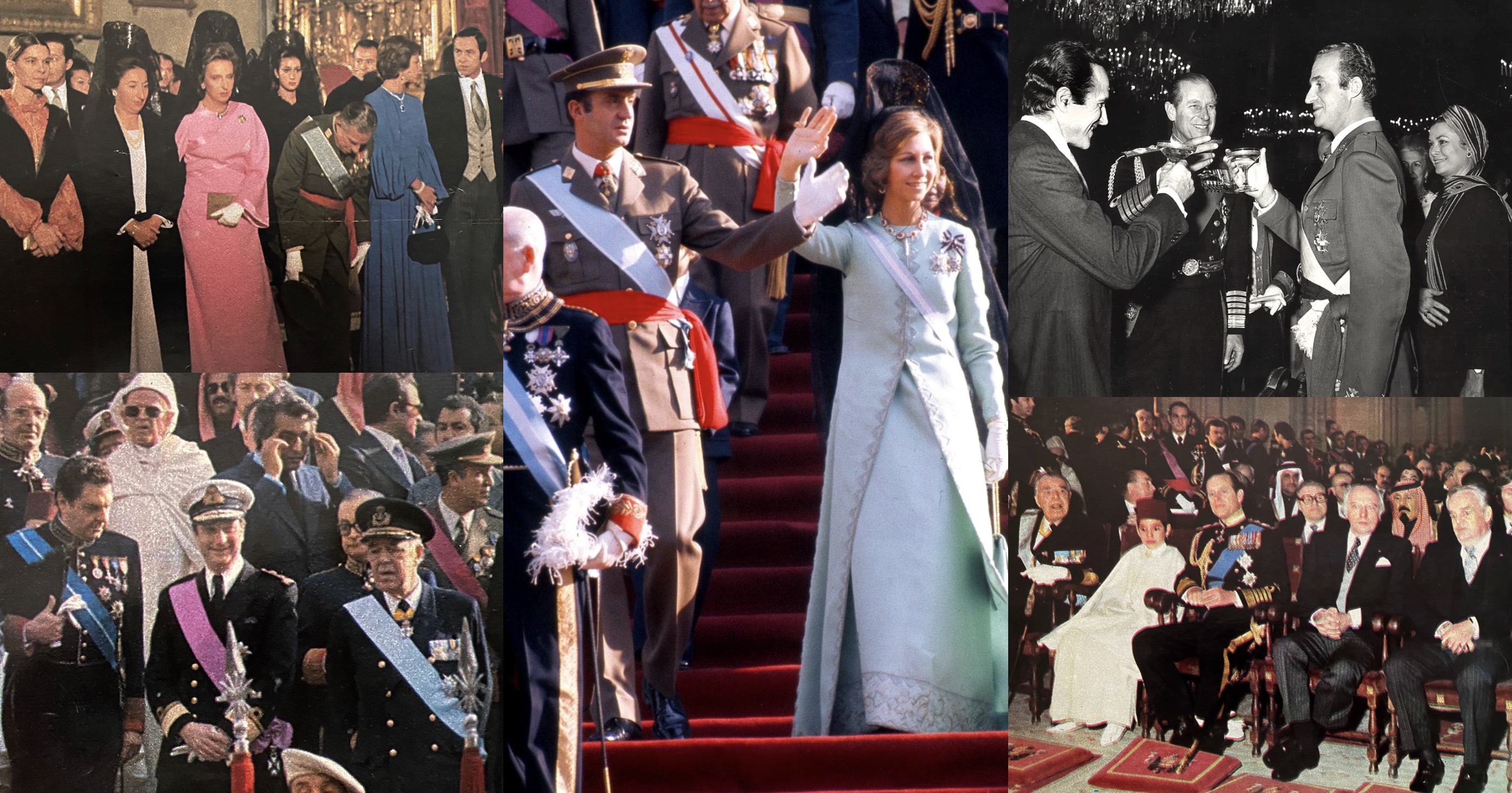
Royalty from Britain, Greece, Sweden, Belgium, Luxembourg, Monaco, Liechtenstein, Morocco and the Middle East joined the extended Spanish Royal Family in Madrid on this day in 1975, 50 years ago, to celebrate the solemn Enthronement Mass of King Juan Carlos I of Spain, who had been proclaimed king following the death of dictator Francisco Franco.


On November 27th, five days after the Assession Ceremony on the Cortes Generales, a Solemn Mass was held at San Jerónimo el Real Church. This religious event, which marked the beginning of new reign, was concelebrated by the bishops of Madrid, Toledo, and Barcelona. The King and Queen entered the church under a canopy, emphasizing the solemnity and historic significance of the moment. While not a coronation, the Mass symbolized tradition, as well as Spain’s Catholic heritage.


The presence of European heads of state, foreign delegations, and royals carried enormous significance: it demonstrated Spain’s return to the international stage, diplomatic acceptance of the new reign, and a collective endorsement from Europe’s monarchies at a pivotal moment of political change. Archbishop Tarancón delivered a special homily, emphasizing values of unity, reconciliation, and moral responsibility, while conveying a message of hope and guiding principles for the nation under its new monarch. Through his words, he highlighted the importance of justice, civic duty, and the ethical foundations necessary for Spain’s peaceful transition toward democracy.

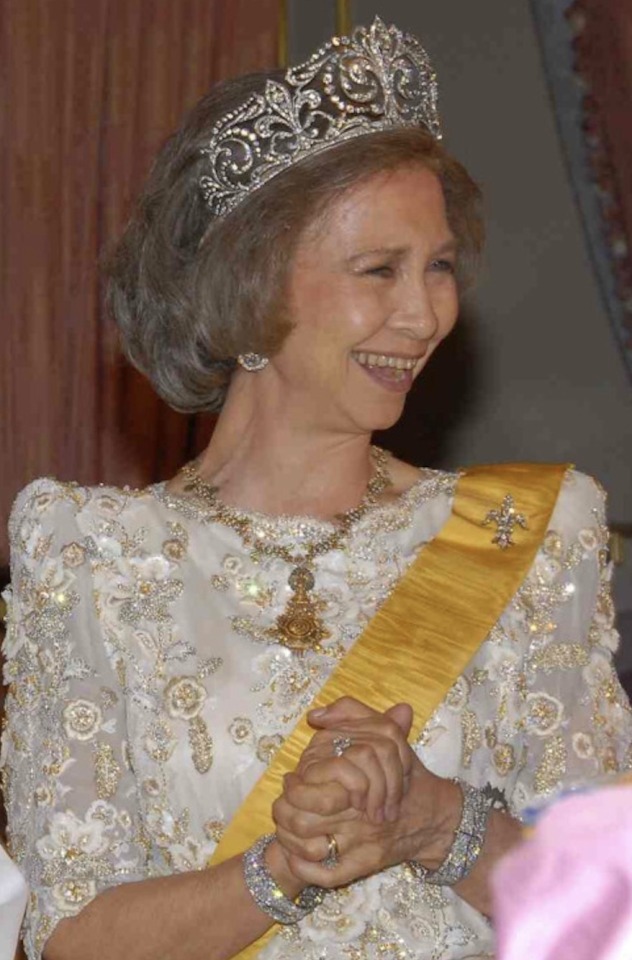
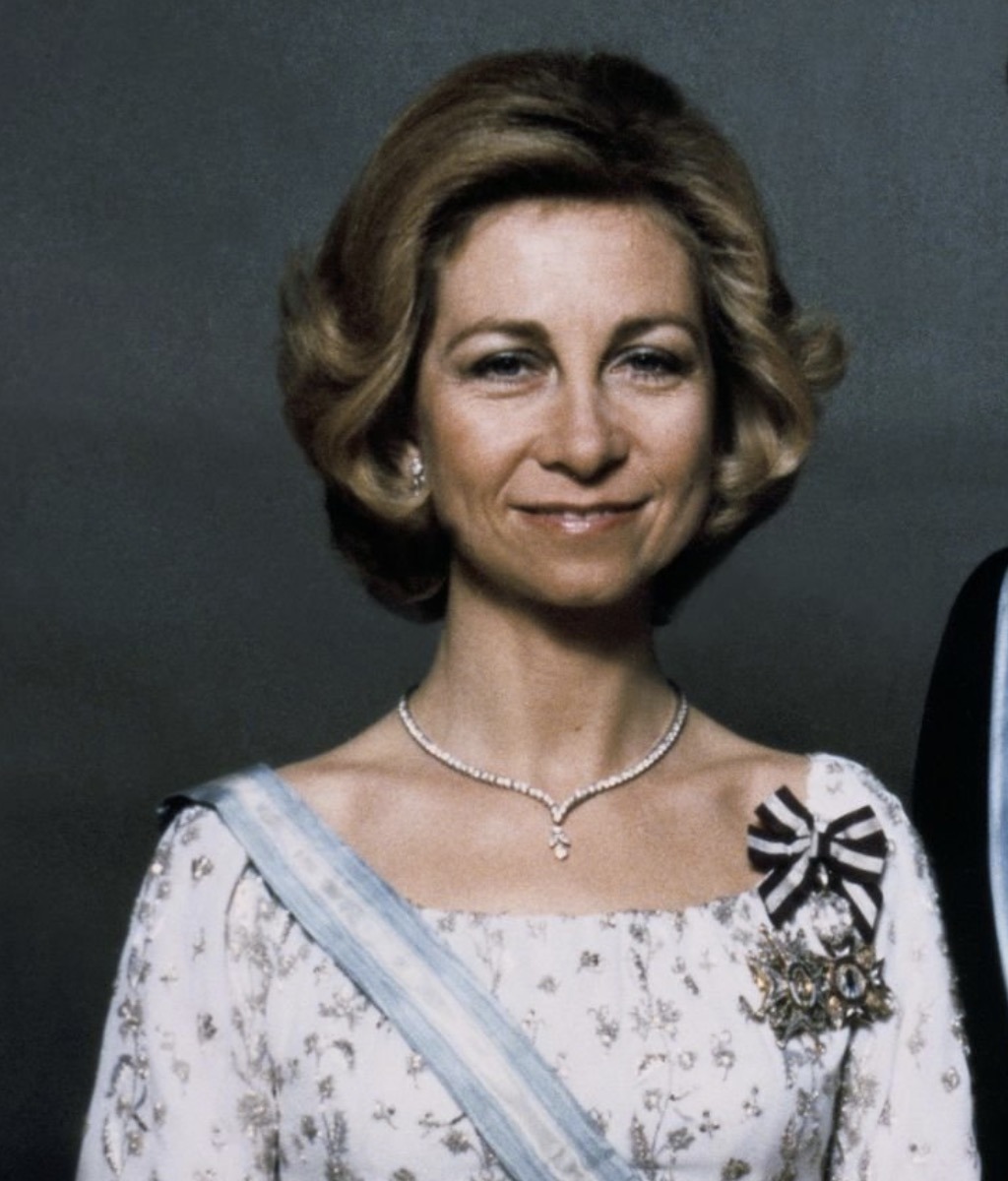
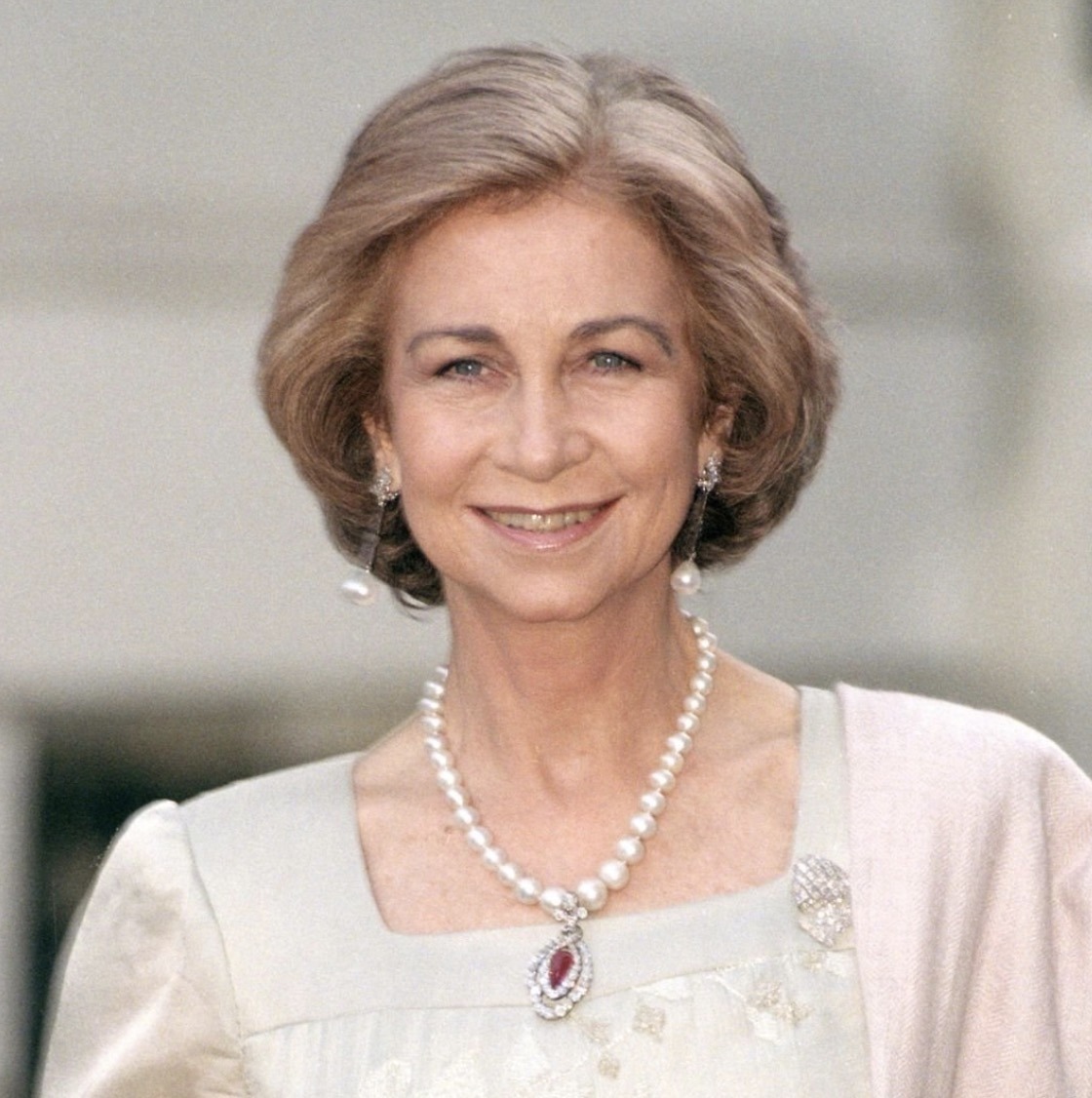
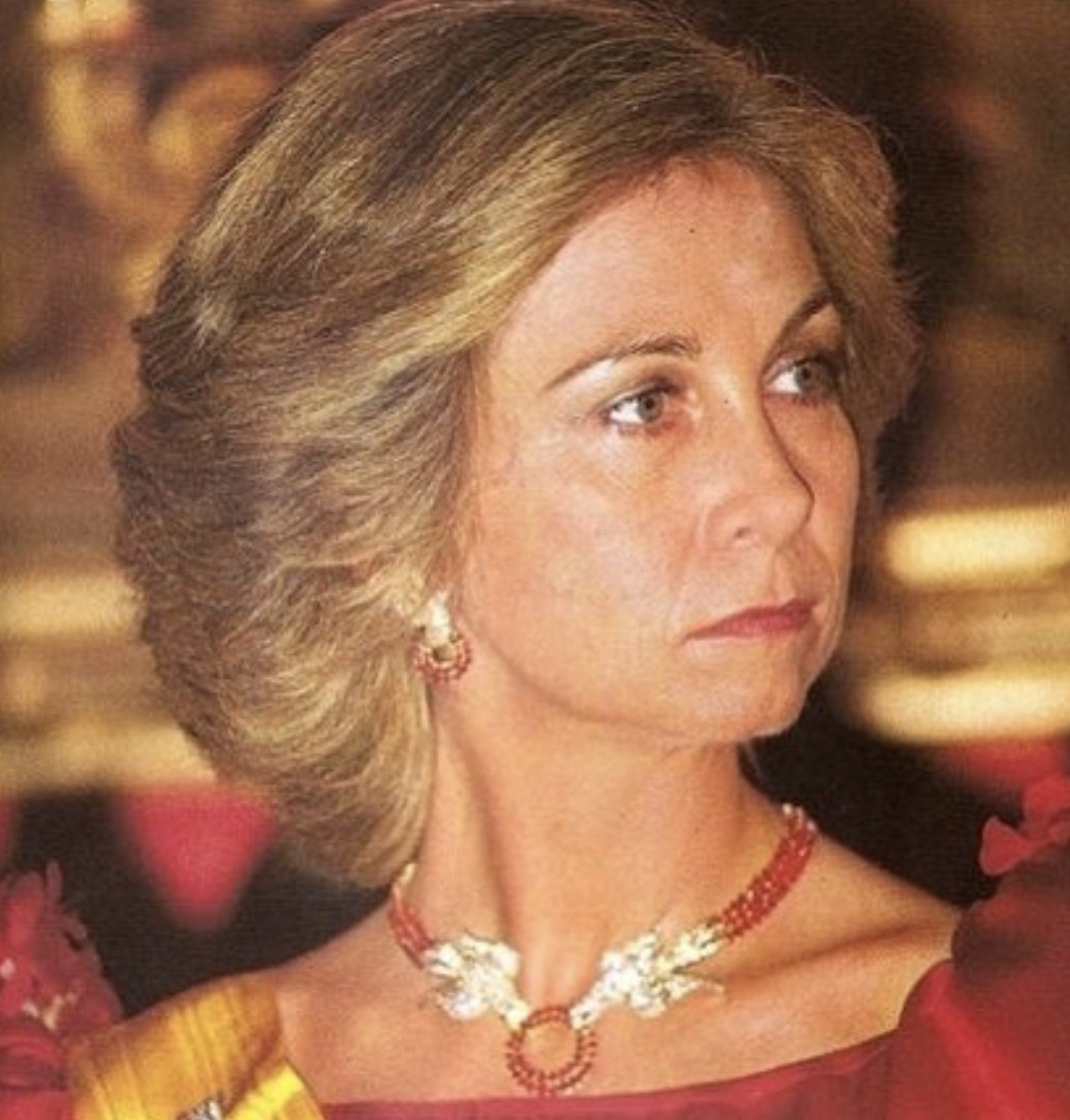
The King wore the Captain General’s uniform with insignia from the three branches of the Armed Forces, a general’s sash, the sash and star of the Order of Carlos III, and the Order of the Golden Fleece. The Queen wore a long turquoise-blue gown with the Niarchos Ruby Necklace, the sash and star of the Order of Carlos III, the star of the Order of María Luisa, and a traditional Spanish mantilla with comb.

Don Juan Carlos and Doña Sofía were accompanied by their three children: Infanta Elena and Infanta Cristina, and Infante Felipe, who would be styled as Prince of Asturias, the heir to the throne.

Despite the absence of the Count and Countess of Barcelona and Queen Frederica, the newly proclaimed Spanish monarchs were joined by their closest relatives: King Constantine II and Queen Anne-Marie of the Hellenes; Infanta Pilar and Infanta Margarita with their respective husbands; and Princess Irene of Greece. Also seated in the front row were Infante Luis Alfonso, from the Bavarian branch of the family, and Infanta Alicia, the King’s aunt.

At the head of the dozens of foreign delegations present were the French President, Valéry Giscard d’Estaing; the German Federal President, Walter Scheel; the Irish President, Cearbhall Ó Dálaigh; and the American Vice President, Nelson Rockefeller.

Prince Rainier and Princess Grace of Monaco.


The Hereditary Grand Duke Henri of Luxembourg

The Hereditary Prince Hans-Adam of Liechtenstein


This gathering was further enhanced by the presence of several royal princes from the Africa and Middle East, namely Prince Moulay of Morocco, Prince Abdul Reza Pahlavi of Iran, and Prince Abdullah bin Abdulaziz of Saudi Arabia.

The event also brought together a large gathering of members of the extended Spanish Royal Family, including Princess Dolores of Borbón, the king’s maternal aunt, Infanta Alicia, the Duke and Duchess of Calabria, and the Duke and Duchess of Siracusa.
Also present were the Duke and Duchess of Cadiz, and his brother, Don Gonzalo de Borbón Dampierre.
Also attending were two of the daughters of another absentee, Infanta María Cristina, Countess of Marone: María Teresa and Giovanna Marone Cinzano y de Borbón.


After the ceremony concluded, the King and Queen rode through the streets of Madrid in an open car to reach the Royal Palace, escorted by the Royal Lancers. Along the way, they received an enthusiastic public reception, waving to crowds along the main streets of the city center.


After arriving at the Royal Palace, the King and Queen entered the building, reviewed the Guard of Honour, and proceeded to the balcony to greet the people. The excitement of the crowds was so great that they appeared on the balcony three times, each time receiving enthusiastic cheers. Following this, all the assembled guests witnessed a military parade.

Some members of the extended royal family observed the military parade from a secondary balcony of the palace. Among them, from left to right, were Doña Marisol de Messía y Lesseps, Countess of Odiel; Princess Dolores of Borbón; Infante José Eugenio of Bavaria; Count José Zamoyski; Princess Margarita of Borbón-Two Sicilies; the Duke of Cádiz; Don Alfonso Zurita; Infanta Margarita; Princess Teresa of Borbón-Two Sicilies; the Duke and Duchess of Calabria; and Infanta Alicia.


The day’s celebrations concluded with reception on the Throne Room, followed by a formal lunch attended by 125 guests, including the foreign dignitaries, members of the Spanish government, and the diplomatic corps.



Prince Juan Carlos was sworn in as King of Spain in front of the Cortes Generales in Madrid, two days after the death of Francisco Franco.
On 22 November 1975, two days after the death of dictator General Francisco Franco, Prince Juan Carlos was sworn in as King of Spain. Franco had ruled with an iron hand for 36 years, after winning the 1936 to 1939 civil war, so this was a turning point in the country’s history and transition towards democracy.


Juan Carlos had sworn “in the name of God and on the holy gospels to uphold the laws of the Francoist state and remain loyal to the principles of the National Movement.” He repeated this oath at his investiture, but in his first speech as king he also referred to a new stage in Spain’s history and the need to make radical improvements.


King Juan Carlos of Spain acceded to the throne after the death of dictator Francisco Franco based on legislation passed during the Franco regime, which designated him as Franco’s successor. Despite his position being set by the dictatorship, he was instrumental in dismantling Franco’s system and transitioning Spain to a parliamentary democracy.

Queen Sofia, the Prince of Asturias, Infanta Elena, and Infanta Cristina joined King Juan Carlos for the Accession Ceremony.


King Juan Carlos’ Speech to the Assembly of the Cortes Generales:
In this hour charged with emotion and hope, filled with sorrow by the events we have just lived through, I assume the crown of the realm with a full sense of my responsibility before the Spanish people and the honorable obligation which for me is implied in the observation of the laws and the respect of a centurylong tradition, now united in the throne.
An exceptional figure has passed into history. The name of Francisco Franco will be an epoch in Spanish history and a milestone, to which it will be impossible not to refer in order to understand the key to our contemporary political life.
With respect and with gratitude, I wish to remember the figure of him who for so many years undertook the heavy responsibility of conducting the government of the state. His memory will be for me an exigency both in duty and in loyalty, which I assume in the service of the state.
Today a new stage starts in the history of Spain. This stage along which we shall advance together has its starting point in peace, in work and in prosperity, the fruit of a common and collective will and strength.
The monarchy will be the faithful guardian of this inheritance and will attempt in all moments to maintain the closest relationship with the people.

‘National Concord’ Sought
Let all understand with generosity and nobility of spirit that our future will be based on a true consensus of national concord..
Let no one believe that his cause will be forgotten, let no one expect an advantage or a privilege. Together we can do everything if to all we give a fair opportunity. I will preserve the laws and see that they are preserved, taking justice as my guiding light and knowing that the service of the people is the end that justifies all my functions.
Justice is necessary for liberty with dignity, prosperity and greatneks.
A just order, equal for all, permits the recognition, within the unity of the kingdom and of the state, of the regional characteristics, as the expression of the diversity of the peoples that constitute the sacred reality of Spain.
This dynamic and changing hour demands a creative capacity that will integrate into common objectives the differing and necessary opinions which give richness and variety to this Spanish people, this people so full of such qualities, which generously gives itself entirely when it is called upon to realize ambitious enterprise.

Pledge to the Armed Forces
As the first soldier of the nation I will insure that the armed forces of Spain, which are an example of patriotism and discipline, will enjoy the efficiency and strength that our people require.
The crown also understands that it has the fundamental duty to recognize social and economic rights. The aim of these rights is to insure to all Spaniards the material conditions that will permit them to exercise all their liberties.
Because of all this, we wish to proclaim today that we do not want a single Spaniard to be without work and that work must allow all to enjoy their personal and family life with dignity, enjoying along with their children the fruits of culture and prosperity.
A free and modern society requires the participation of all in the decision‐making process, in the media, in the different levels of education and in the control of the national wealth.
It is a communal enterprise and a Government task to make this participation every day truer and more efficient.

The repect of human dignity, which is understood by the principle of religious liberty, is an essential element in the harmony of our society.
It is very gratifying for me at this time to greet the dignitaries of other nations who have come to attend this ceremony.
‘Nucleus of a Great Family’ Spain is the original nucleus of a great family of brother nations. It is a duty to stimulate everything that leads to a community of interests, to an interchange of ideals and to mutual cooperation.
This idea of Europe would be incomplete without taking the Spaniard into account. Europe must take Spain into account, and we Spaniards are Europeans.

I would not be faithful to the tradition of my blood if at this moment I did not recall that for generations as Spaniards we have fought to restore the territorial integrity of our homeland.
With full conviction, the King takes on this objective.
Gentlemen Councilors of the realm and Deputies, I ask for God’s help for us all as I speak from the Cortes to the Spanish people I promise you firmness and prudence. I have confidence that we will fulfill our duties.
If we remain united we will have won our future. Long live Spain!


Afterwards, the Royal Family viewed a Parade outside the Cortes Generales, and then the new King and Queen attended the lying-in-state of General Franco.