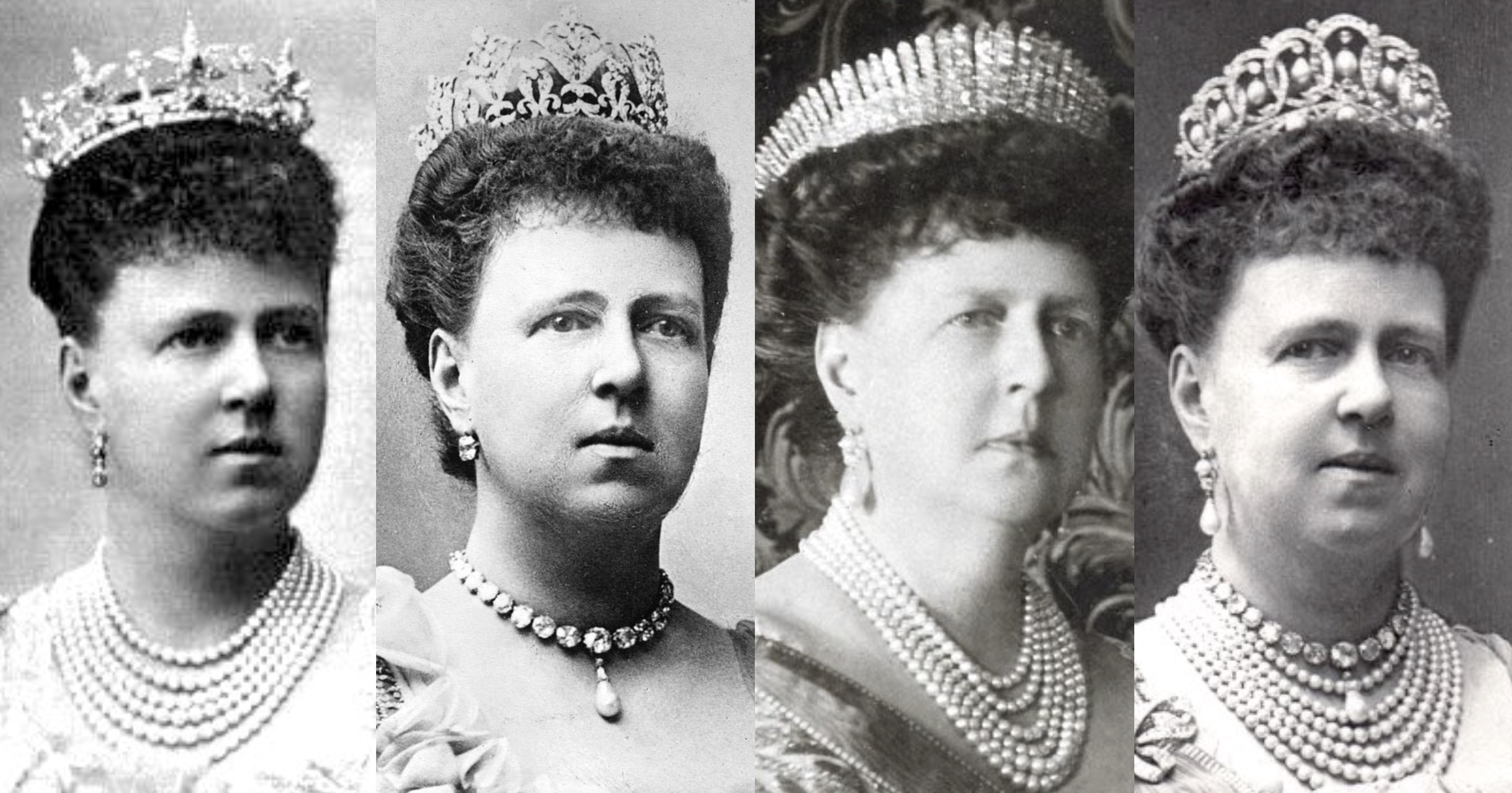
Today marks the 60th Anniversary of the Death of Princess Beatrice of Saxe-Coburg und Gotha and Edinburgh, Infanta of Spain and Duchess of Galliera who who passed away on this day in 1966! Baby Bee was the youngest daughter of Prince Alfred, Duke of Edinburgh and Grand Duchess Maria Alexandrovna, and while not as famed as her elder sisters, Queen Marie of Romania and Grand Duchess Victoria Melita, this Infanta of Spain by marriage lived a turbulent yet very interesting life, dedicated to her family and to social causes, and to mark the day, were are featuring her Infanta Eulalia’s Emerald Necklace!
Grand Duchess Maria Alexandrovna’s Diamond Fringe Tiara | Diamond Fleur-de-Lys Brooch | Infanta Eulalia’s Emerald Necklace


In 1909, Princess Beatrice married Prince Alfonso of Orléans Borbon, Infante of Spain, the son of Prince Antoine of Orleans, and Infanta Eulalia and a first cousin of another Alfonso, the King of Spain. The couple met for the first time during the Wedding of King Alfonso XIII and Princess Beatrice’s first cousin, Princess Victoria Eugenie of Battenberg, in Madrid in 1906.


Ali and Bee lived a relatively quiet life between Andalucía and Madrid. However, there were times when the couple was forced to move abroad due to some intrigues in Madrid’s Court. Despite this, Queen Ena and Infanta Bee, first cousins, always remained very close, considering themselves best friends while Infante Alfonso remained a very respected person within the Royal Family.


Unfortunately, very few pictures of the Infanta in gala attire exist. Her jewel collection still remains a mystery to us. Yet, it is known that she received and borrowed pieces from the collections of her mother, Grand Duchess Maria Alexandrovna, and her mother-in-law, the Infanta of Spain.

The spectacular emerald necklace has its origins with Queen Isabella II, who presented the jewel to her daughter, Infanta Eulalia, as a wedding gift when she married her first cousin, Infante Antonio of Orléans-Borbón, in 1886. Created by the renowned Parisian jeweller Mellerio, the impressive piece, valued at 70,000 pesetas at the time,” featured fourteen cabochon emeralds as large as pigeon eggs alongside three striking pear-shaped emeralds. Designed as a convertible jewel, it could also be separated into a brooch and five pins.


The Infanta later commissioned a smaller emerald and diamond bandeau to complement the necklace, and was pictured wearing both pieces for the Wedding celebrations of Infanta Isabel Alfonsa of Spain and Count Jan Zamoyski in 1929.


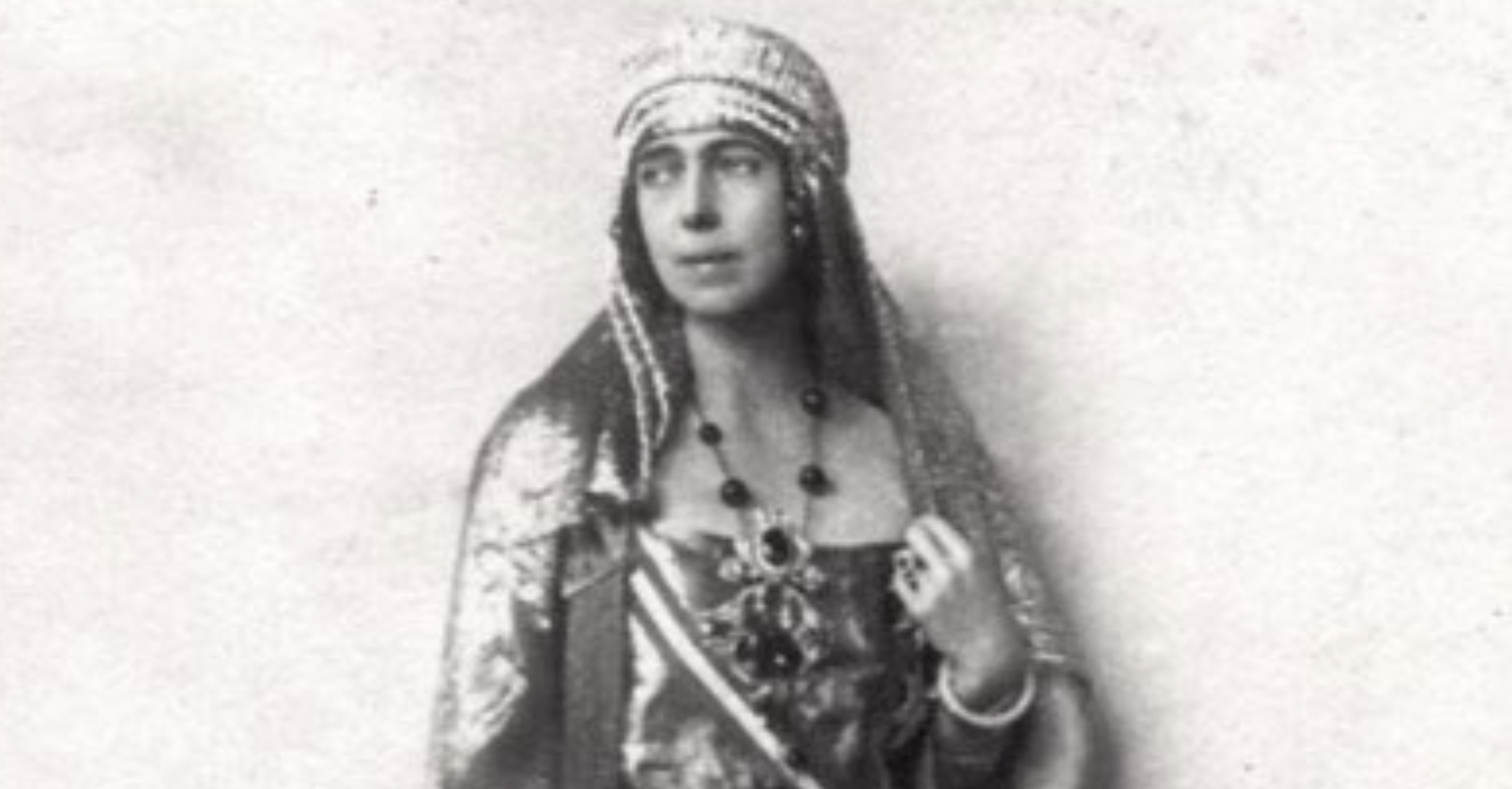
A few years earlier, in 1922, Doña Eulalia loaned the Emerald Necklace to her daughter-in-law, Infanta Beatrice, for her to attend the Coronation of her sister and brother-in-law as King and Queen of Greater Romania in the city of Alba Iulia, in Transylvania.
Referring to her sister, Queen Marie Of Romania noted in her diary:
The one who outdid herself yesterday was Sister Baby. She was dressed entirely in gold, with a long train of gold brocade and Russian pink coral, adorned with white fox fur. But it was especially her headdress that impressed me. She had an opaque gold veil draped around her face in the Egyptian style, with her diamond tiara positioned quite high and long emerald pendants hanging on either side of her face. Superb emeralds and diamonds completed her outfit, along with the large violet and white Spanish band. I felt very proud of my women-folk.”
The Infanta paired the Emerald Necklace with the stunning Diamond Fringe Tiara she had inherited from her mother, Grand Duchess Maria Alexandrovna of Russia.

Like almost all of Infanta Eulalia’s jewels, the necklace is shrouded in mystery. Following the fall of the Spanish monarchy in 1931, her jewels remained in the Royal Palace of Madrid and were, in theory, dismantled and taken to Mexico to be sold by the republican authorities.
This article was written by assistant editor, David Rato, who runs the Spanish Royal Jewels account on Instagram!
Grand Duchess Maria Alexandrovna’s Fringe Tiara
Diamond Fleur-de-Lys Brooch
Infanta Eulalia’s Emerald Necklace
Vladimir Sapphire Kokoshnik Tiara 
Romanian Massin Tiara
Diamond Fringe Tiara
Diamond Loop Tiara
Cartier Pearl Tiara
Turquoise Tiara
Sapphire Bandeau Tiara
Cartier Sapphire Pendant
Grand Duchess Maria Alexandrovna’s Pearl Brooch
Cartier Diamond Sautoir
Fringe Tiara


Origin: Wedding Gift from her mother, Tsarina Marie Alexandrovna in 1874
Notable Appearances: The Coronation of her nephew, Tsar Nicholas II, in 1896 and the Coronation of her nephew, King George V, in 1911.
Fate: Left to Princess Beatrice, Duchess of Galliera, who sold it to her sister, Queen Marie of Romania, and was in turn inherited by her daughter, Queen Marie of Yugoslavia, who sold it at Auction in 1960. Now unknown.
Bolin Ruby Tiara

Origin: Wedding Gift from Tsar Alexander II in 1874
Notable Appearances: The Coronation of her nephew, Tsar Nicholas II, in 1896
Fate: Left to the Princess of Hohenlohe-Langenburg and later frequently worn by Princess Margarita of Greece, before being sold at auction in 1978 and later dismantled
Diamond Tiara

Origin: House of Saxe-Coburg und Gotha
Notable Appearances: The Wedding of the Prince of Hohenlohe-Langenburg and her daughter, Princess Alexandra of Saxe-Coburg and Gotha, in 1896.
Fate: Passed on to Princess Victoria Adelaide, Duchess of Saxe-Coburg and Gotha and Albany and likely broken up following the First World War
Faberge Pearl and Diamond Tiara


Origin: Unknown, possibly made by Faberge
Notable Appearances: The Wedding of the Grand Duke of Hesse, to her daughter, Princess Victoria Melita of Saxe-Coburg and Gotha, in 1894 and the Wedding of the Duke of Schleswig-Holstein and Princess Dorothea of Saxe-Coburg and Gotha in 1898
Fate: Left to Queen Marie of Romania who had it transformed into her Cartier Pearl Tiara, now location is unknown.
Sapphire Tiara

Origin: Wedding Gift from Tsar Alexander II in 1874
Notable Appearances: Russian State Banquet at Windsor Castle in 1874
Fate: Given as a wedding gift to her daughter, Grand Duchess Victoria Feodorovna of Russia, and likely sold after the Russian Revolution
Ruby Tiara
Origin: Unknown but some speculate it may be Queen Victoria’s Oriental Circlet Tiara without the Arches
Notable Appearances: Portrait in 1880s
Fate: Unknown