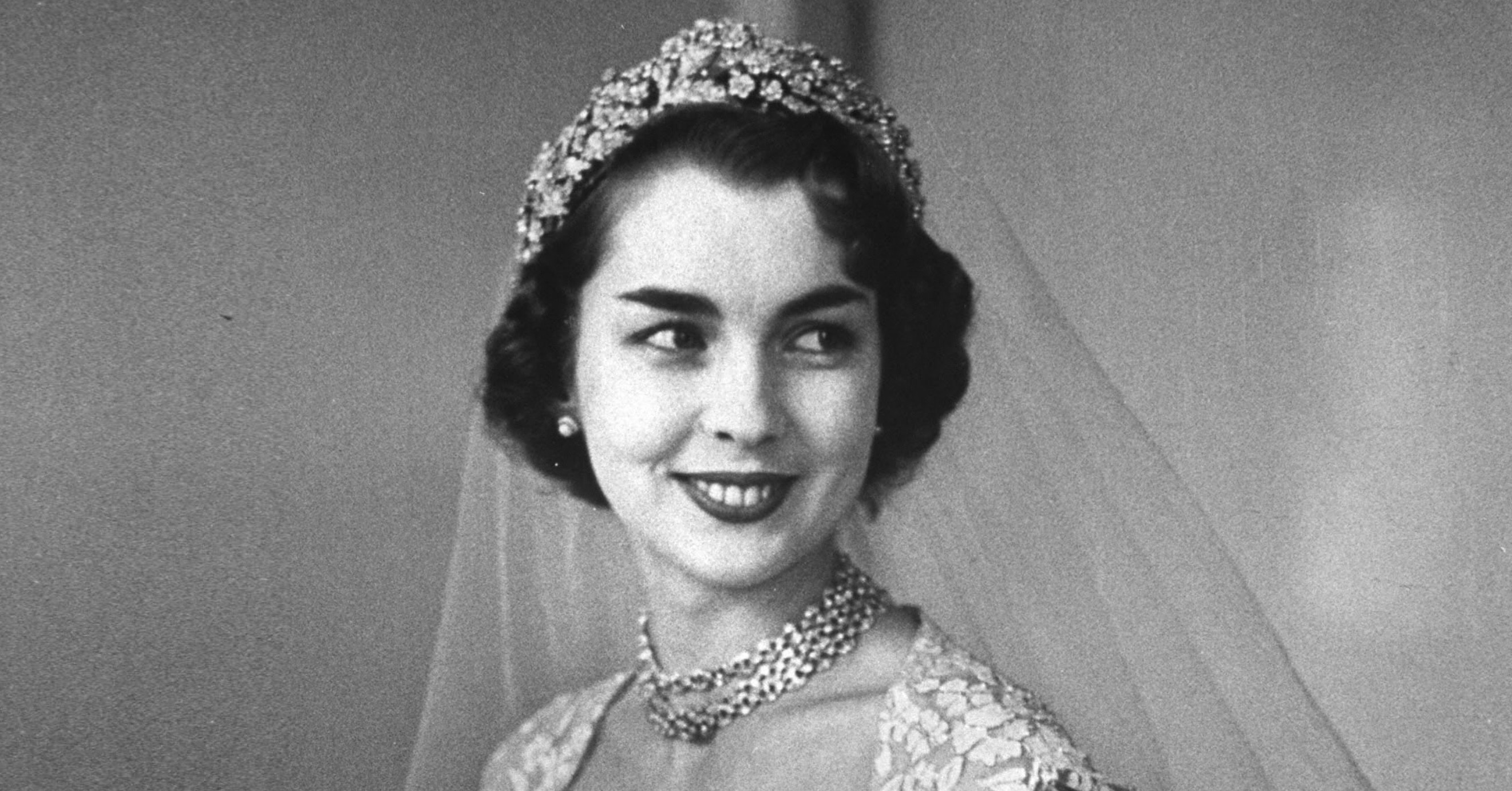
Tomorrow marks the 15th Anniversary of the Death of Jane, the 9th Duchess of Buccleuch and Queensberry, who passed away in 2011! The glamorous Norman Hartnell Model who married the Duke of Buccleuch and wore much of the family’s spectacular jewellery collection, which included the Buccleuch Diamond Mayflower Tiara!


A spectacular Diamond Mayflower Tiara featuring mayflowers and leaves, this piece was made into the 1870s and disassembles to form nine brooches.


The Tiara seems to have been worn, along with a piece of the Diamond Belt, by the 6th Duchess of Buccleuch, Mistress of the Robes to Queen Victoria, for the Wedding of Prince Carl of Denmark (later King Haakon VII of Norway) and Princess Maud of Wales in 1896.


The Mayflower Tiara was most notably worn by Jane McNeill when she married the then Earl of Dalkeith at St. Giles’s Cathedral in Edinburgh in 1953, making a spectacular pairing with her Hardy Amies gown and an heirloom diamond necklace.

The Countess of Dalkeith was also seen wearing the Diamond Mayflower Tiara while talking with Major Sir Edward Ford at the Centenary of the Royal Opera House in Covent Garden in 1958.
Major Sir Edward Ford and the Countess of Dalkeith. She is wearing a floral-patterned tiara. Behind Sir Edward is the Earl of Dalkeith. Sir Edward is Assistant Private Secretary to the Queen and formerly to King George VI.

In 1968, Frances Montagu Douglas Scott, a granddaughter of the 7th Duke and Duchess of Buccleuch, wore the Diamond Mayflower Tiara to marry the 3rd Baron Cranworth.

The Diamond Mayflower Tiara was also worn by another family bride, Moyra Dawnay, also a granddaughter of the 7th Duke and Duchess, who married Timothy de Zoete in 1969.

In 2014, it appears that the Diamond Mayflower Tiara was worn by Elizabeth Honor Cobbe when she married the current Earl of Dalkeith at Drumlanrig Castle, though there are no photos that show the Tiara.

More recently, a few years ago, the Mayflower Tiara was on display at the Family Seat of Bowhill House, as part of their ‘Love and Respect in the Victorian Age’ Exhibit.