This year marks the 150th Anniversary of the Birth of Princess Sophia Duleep Singh, the daughter of the last Maharaja of the Sikh Empire who was a goddaughter of Queen Victoria and a prominent Suffragette Activist. Earlier this month, we got to finally visit the The Last Princesses of Punjab Exhibition at Kensington Palace, which runs until November 8th.


Discover the story of Punjabi princess and suffragette icon, Sophia Duleep Singh and five women who shaped her extraordinary life, in this exhibition at Kensington Palace for 2026. Sophia and her sisters Catherine and Bamba, her mother Bamba Muller, grandmother Jind Kaur and godmother Queen Victoria each expressed womanhood, power, and royalty in different ways. They infused their identities and heritage into the causes they devoted themselves to, and became powerful changemakers in their own right.

For the first time, Queen Victoria’s childhood home of Kensington Palace offers an intimate look into six lives shaped by Empire. This exhibition — created to celebrate Sophia’s 150th birthday — focuses on the women of a royal dynasty whose destinies were profoundly and violently transformed by it. The voice of British South Asian people today is present throughout the exhibition, responding to themes of identity, expression, and resistance.


The Last Princesses of Punjab exhibition brings together rarely seen objects, audio-visual displays and modern voices to illustrate the stories of these five women and their relationships with Queen Victoria, the Empire, and each other.


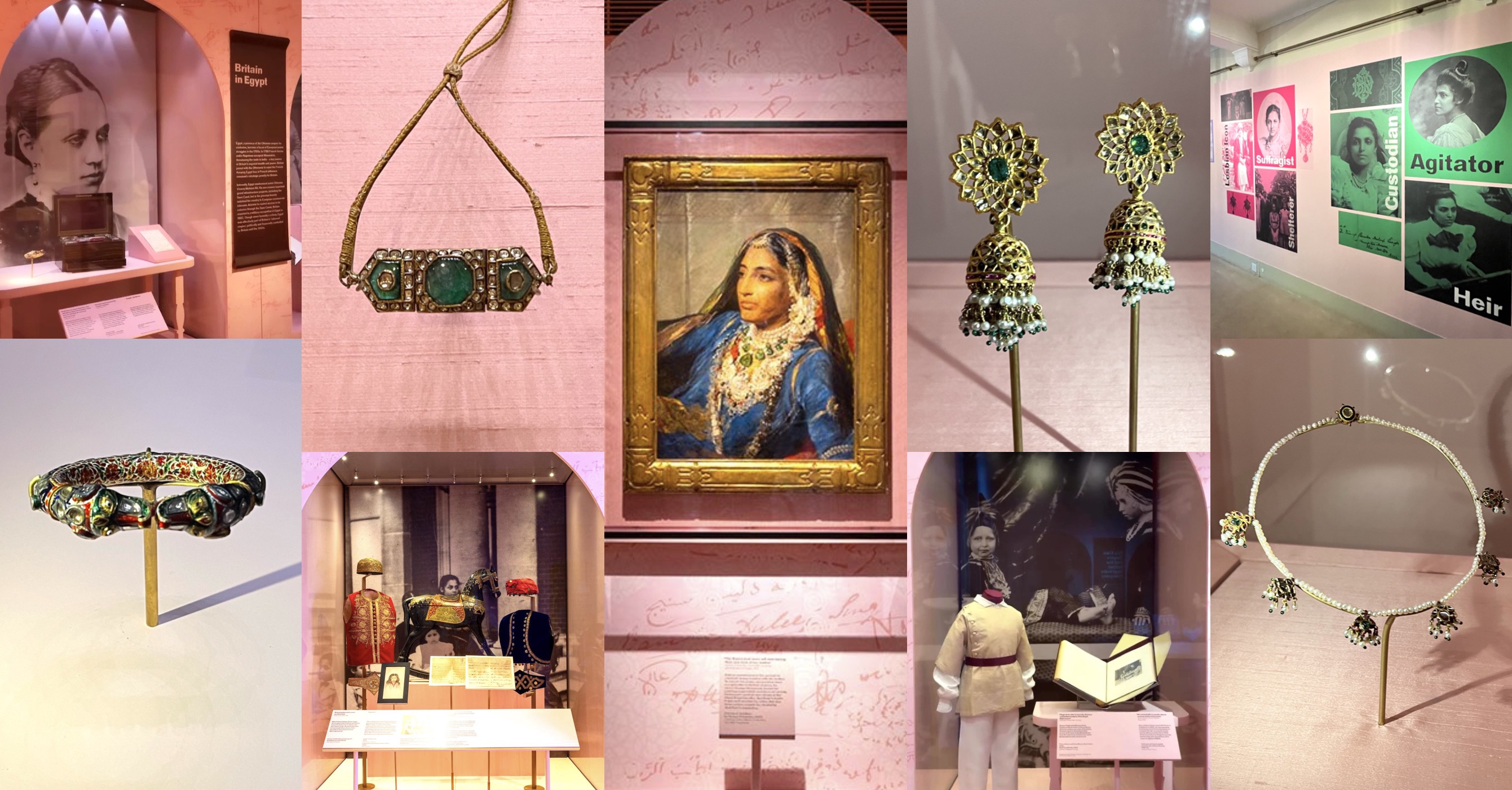
The exhibition begins in a gallery focused around an iconic portrait of Maharani Jind Kaur by George Richmond surrounded by artifacts from Maharaja Ranjit Sing’s childhood in England, his relationship with Queen Victoria and her family, and his marriage to Maharani Bamba, in addition to some clothing and toys of their children from Elveden Hall.


Most extraordinary among the objects from the Princesses on display are the surviving jewels of Maharani Jind Kaur which were confiscated by the British East India Company but notably returned to her upon her arrival in London in 1861, thus she was bedecked in those jewels in her portrait by George Richmond.


When the British East India Company invaded and took over the Treasury of Lahore, they confiscated the most important Jewels, like the Koh-i-Noor Diamond and the Timur Ruby, for Queen Victoria while other treasures were auctioned by Messrs Lattie Bros in the Diwan-i-Am of the Lahore Fort. Maharani Jind Kaur had been separated from her son, Maharajah Duleep Singh, who was sent to England while she fled imprisonment into exile in Nepal. The Maharani’s personal jewels, which included this Tikka among 600 pieces of jewellery, had been confiscated when she was imprisoned at Chunar Fort and after several years in exile, it was agreed that her private property and jewels would be returned on the basis that she left India, with the casket of her jewels returned upon her arrival in London in 1861, as described by Lady Login:
Her Jewels had at the moment arrived from the Custom House, and so delighted was she at the sight, that she forthwith decorated herself, and her attendants, with an assortment of the most wonderful necklaces and earrings, strings of lovely pearls and emeralds being arranged, in graceful concession to English fashion, as a sort of fringe or frilling inside the brim of the bonnet, in the place where the custom then was to wear a semblance of a “cap!” The extraordinary figures which the poor Maharanee and her favourite women cut, in this attire, can be better imagined than described!


After Maharani Jind Kaur’s passing in 1863, her Jewels were inherited by her son, Maharajah Duleep Singh, and passed along to his various children, who left no descendants, with these jewels loaned by the Toor Collection of Sikh Art.


The following galleries focus on Princess Sophia’s suffragette activism, Princess Catherine’s rescue of Jewish families from Nazi Germany and Princess Bamba’s role in the Indian independence movement after her move to Lahore.
The Last Princesses of Punjab is available to visit at Kensington Palace until 8 November 2026
Maharani Jind Kaur’s Tikka

Cartier Emerald Suite
Cartier Ruby Suite
Bulgari Gold Suite


