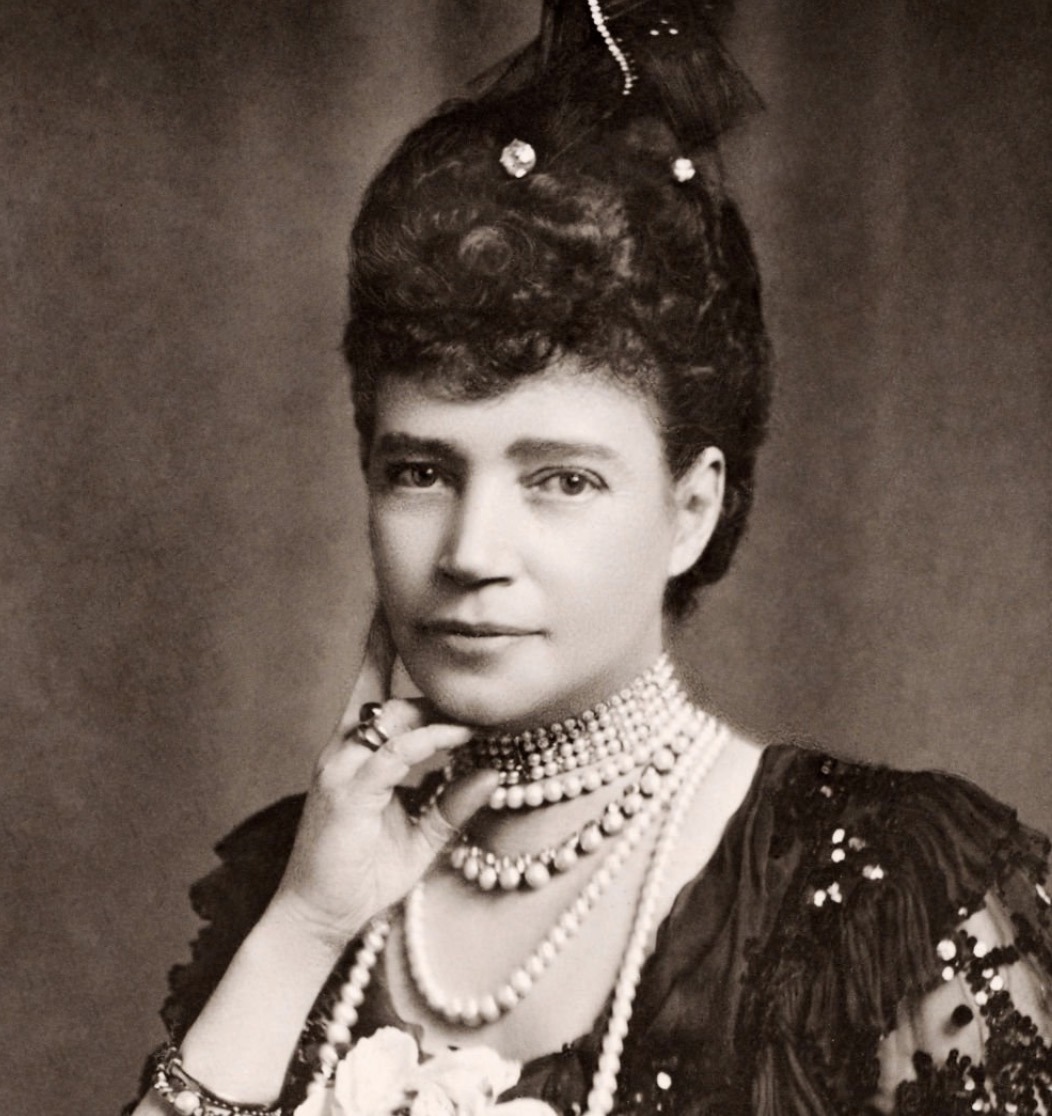
Queen Victoria of the United Kingdom and King Christian IX of Denmark are generally considered the matriarch and patriarch of today’s European royalty. Queen Victoria had nine children and King Christian had six. All of these children reached adulthood, with many of them marrying into ruling European dynasties. Their children and grandchildren eventually occupied the majority of the thrones of Europe and their descendants continue to remain on many of them.
Thank You to Antonio Orefice for sharing this article with us!

During the 19th century Germany was the major source for finding brides for Europe’s future kings. The region included a number of sovereign families that included monarchies like Prussia, grand duchies such as Baden and included medialized families who were left without territory, while still maintaining a rank equal to that of the sovereign families. Personal choices also mattered. Victoria was half German and her husband Prince Albert was a German prince from Saxe-Coburg-Gotha. So their preferences for the children’s spouses understandably were to choose German mates. In fact, six of Victoria and Albert’s children married Germans. Their eldest daughter, Victoria, the Princess Royal, known as Vicky, married Crown Prince Frederick, the future king of Prussia, in 1858. Next to wed was the second daughter, Princess Alice, to Prince Louis of Hesse-Darmstadt in 1862, a few months after her father, Prince Albert’s death. The third daughter, Princess Helena, married Prince Christian of Schleswig-Holstein. Victoria and Albert’s two youngest sons, Prince Arthur and Prince Leopold married, respectively, Princess Louise Margaret of Prussia and Princess Helena of Waldeck-Pyrmont. The couple’s youngest daughter, Princess Beatrice, chose Prince Henry, a member of the Battenberg family. Three children in the family did not marry Germans. Victoria’s fourth daughter, Princess Louise, married the commoner, John Campbell, Duke of Argyll, in 1871. In 1874, the second son in the family, Prince Alfred, wed Grand Duchess Marie, only daughter of Tsar Alexander II, and whose mother had been a German princess. In both of these cases, these exceptions are happily overcome by the fact that they were extremely wealthy parties. And now we come to the most illustrious of marriages in Victoria’s large family. She would have preferred a German bride for her heir, Prince Albert Edward, Prince of Wales, known familiarly as Bertie. However, a series of circumstances and the particular attractiveness of the young woman in question, led to Princess Alexandra of Denmark, being chosen as the bride for Bertie.

For Christian of Denmark, the choices of consorts for his children, made by his wife Louise, were a little different. Continuing a tradition of Scandinavian connections, it was from Sweden that their oldest son, the future King Frederik VIII, welcomed his bride Princess Louise. The second son, Prince William, was elected by European powers as the king of Greece. He ruled Greece as King George I for almost fifty years, (1863-1913). The youthful King George found a wife in Russia, the sixteen year old Grand Duchess Olga. They had eight children over the next twenty years, two of their sons marrying a granddaughter and a great-granddaughter of Queen Victoria. Olga, being of the Orthodox faith was able to retain her religion and bring her children up in Greece’s Orthodox faith. Christian and his wife, Louise’s two eldest daughters, Alexandra and Dagmar, married heirs to the thrones of Britain and Russia. Alexandra married Albert Edward, Prince of Wales, in March 1863. Her younger sister became Marie Feodorovna, when she married Czarevitch Alexander, later Czar Alexander III, in 1866. The two youngest children in the Danish royal family, Princess Thyra married Ernest Augustus, the heir to the House of Hanover. Her younger brother, Waldemar, unusual for a Protestant prince, chose the Catholic Princess Marie, from the House of Orleans.

This intense marital activity “produced” a large number of grandchildren: as many as forty-two births of grandchildren for Queen Victoria and thirty-nine for King Christian IX. As decades passed, the number of descendants multiplied. In the history of European dynasties it was important to have the offspring marry into families that would enrich both dynasties politically. An example of political maneuvering was demonstrated by the Austrian Empress, Maria Theresa. During the mid-eighteenth century she managed to marry her daughters into the dynasties of France and several Italian states. When the daughters of Maria Theresa of Austria left home for Parma, Naples and Paris, they went to carry out an essentially political task and knew they would never see their mother again. After the Congress of Vienna, Europe enjoyed relative peace. Fifty years later, Bismarck consolidated the kingdoms, duchies and small states in Germany causing brief wars.


Around the middle of the century rail travel became possible for the rich. Various royal houses had personal trains made increasingly luxurious. Royal yachts provided the families a way to travel overseas in comfort. Alexander III and Marie (Dagmar) had the ‘Polar Star’ and the royal British yacht was the ‘Victoria and Albert’. Kaiser Wilhelm II was not to be outdone and equipped himself with a small flotilla of yachts with which he challenged his English cousins during the annual regatta in Cowes. During the last four decades of the 19th century, the children of Queen Victoria and King Christian, despite being disbursed throughout Europe, made frequent visits, creating strong family bonds. Family gatherings became easier and facilitated lasting friendships and some romances among the large network of royal relatives. In this way, Victoria and Christian’s children and grandchildren could easily have periodic meetings with their parents, grandparents and numerous uncles, aunts, cousins and their spouses. These family reunions were held in the United Kingdom at Osborne, Windsor or Balmoral. Every year the royals gathered in Denmark at Fredensborg or Bernstorff. We have testimony of these reunions in photos detailing events at weddings, funerals and jubilees through numerous letters preserved in archives. During the last years of the nineteenth century videos documented events.
Very important sources are autobiographies written by three of Victoria’s granddaughters: Princess Marie Louise of Schleswig-Holstein, Princess Alice of Albany and Queen Marie of Romania, née Princess of Edinburgh. Additionally, there was also an autobiography written by a Russian granddaughter of Christian, Grand Duchess Olga Alexandrovna. One of authors cited above, Princess Marie Louise, a daughter of Princess Helena, Queen Victoria’s third daughter, spent her childhood near her grandmother and had the opportunity to meet her cousins when they visited with the queen. The memoirs of Marie Louise, the same age as her cousin, Princess Alix of Hesse and the future Tsarina Alexandra, are very interesting. After years spent near her grandmother, the young woman married and moved to Germany, living in Berlin and Dessau the small capital of her father-in-law, the Duke of Anhalt. Marie Louise was therefore able to illustrate the notable differences existing between the court of St James, that of Berlin and the provincial court at Dessau.

A similar situation emerges from the autobiography of Princess Alice, who also spent her childhood near her grandmother and then at age sixteen moved to Germany in 1899, with her mother and younger brother. From their writings we learn that Queen Victoria’s court, despite the pomp and splendor, was simplicity itself compared to the complex and very strict rules at the courts in Germany. The way of dressing, visits even between close relatives, the means of transport allowed and even sports allowed to play: in Germany everything was subject to very strict prescriptions and protocols. For example, Prussian princesses were forbidden to ride a bicycle and violations led to the confiscation of the vehicle. It does not matter if the culprit is the sister of the Empress Augusta Victoria, for this violation of etiquette must undergo a lesson in behavior modification from the Kaiser himself! During court receptions in the United Kingdom, princesses are accompanied to dinner, by ambassadors, or ministers. According to the Queen’s instructions the women must be able to entertain their companions with brilliant conversation. In Berlin, the participants at court meetings are divided into different rooms according to their rank. A royal highness could not be in the same room with a serene highness, not even if they were husband and wife!


The picture that emerges from the autobiography of Grand Duchess Olga, the younger daughter of Tsar Alexander III, is that of a united family that lived within very strict limits, dictated not so much by protocol, but by the need for security. After the attack that killed Alexander II in 1881, the family of his son and heir, Alexander III, lived in a state of virtual imprisonment. The annual holidays in Denmark were a fundamental outlet because they allowed the family to enjoy a freedom impossible in Russia. The Tsar’s yacht, the Polar Star, took the family to Denmark for their longed for holiday. A cow accompanied them to supply milk for the children. Olga recounts the joy they all had being with their cousins and their beloved Apapa, King Christian, who played with his grandchildren and their Amama, Queen Louise, who taught them the secrets of gardening. The atmosphere during these family gatherings in Denmark was decidedly international: the children and grandchildren of the Danish sovereigns came from the United Kingdom, Russia, Greece and Hanover. There were also the French cousins. Many languages were spoken. Since he was a boy, Tsarevich Nicholas could speak and write perfect English, French and Danish, as well as obviously, Russian. By order of King Christian, discussion of politics was prohibited to avoid any friction among the numerous relatives. The family dedicated themselves to sports and bicycle trips which eventually became the most popular means of transport around the Danish countryside. The cousins created a small cycling club and appointed their Uncle Sasha, Tsar Alexander III, as its leader, but on the condition that he not actually ride a bike, because his huge bulk could destroy it. The atmosphere in Denmark during these holidays was quite relaxed and jokes were common.

At gatherings of Victoria’s extended family, English was the predominant language spoken. English began to replace French as the lingua franca during the 19th century. The future George V was only able to express himself in his native English, while Victoria’s grandchildren and great-grandchildren, who lived in various states of Germany, routinely communicated with their parents and their grandmother in perfect English. This was primarily due to the English nannies who were employed by the parents of these royal children. The letters exchanged between Victoria, her daughters and her granddaughters, show how tactfully the Queen tried to keep their conversations private. Victoria was generous with advice on clothing and diet. She was concerned in choosing the right spouse for her progeny as well as the health of her female relatives, especially with pregnancies and births. She appeared particularly anxious about her daughter Vicky’s first pregnancy. Decades later, Vicky was so worried about her own daughter, the newly married Princess Sophie, who was preparing to leave for Greece, that she included a mid-wife into the young woman’s entourage. To avoid disturbing the happiness of the bride and the susceptibility of the Greeks, the woman traveled under the guise of a lady-in-waiting. By this time, 1889, there was a growing concern that royal babies could be affected by hemophilia, the hereditary disease that was afflicting a growing number of Victoria’s family. This disease would have tragic consequences, particularly in the royal houses of Russia and Spain.

Let’s now see who the grandchildren of these two formidable monarchs were. Queen Victoria’s first grandchild, the future Kaiser Wilhelm II, was born in 1859 and his youngest cousin, Prince Maurice of Battenberg, in 1891. The first of her grandchildren to marry was Princess Charlotte of Prussia, in 1878 and the last to wed was Princess Patricia of Connaught, in 1919. The chronological span of Denmark’s King Christian’s grandchildren was similar.


Times changed and the marriages of Victoria’s grandchildren were not always the result of choices made by their parents. In several instances, choices were even against the wishes of their parents and their powerful grandmother. For all future spouses, the traditional “inspections” by Victoria were mandatory before marriage. In the end even when she had some doubts, she never withheld her blessing.

The most prominent grandchildren of Victoria were naturally those who inherited thrones. Grandsons of Victoria who filled these lofty positions were first of all, her eldest grandson, Kaiser Wilhelm II, King George V of the United Kingdom, the Grand Duke Ernest of Hesse Darmstadt and Grand Duke Charles Edward of Saxe-Coburg-Gotha, the last two rulers within the empire of their cousin, Wilhelm.


The number of granddaughters who became sovereign consorts was greater. Princess Sophie of Prussia married Constantine, the son and heir of King George I of Greece. Constantine was a grandson of King Christian IX. Princess Maud of Wales wed her first cousin, Prince Carl of Denmark (another grandson of Christian IX). Together this couple after more than five hundred years, would become the first modern day rulers of Norway in 1905. Princess Alix of Hesse Darmstadt, took the name Alexandra, after marrying Tsar Nicholas II (another grandson of Christian IX). They would be the last monarchs of Russia. Princess Marie (Missy) of Edinburgh’s mother, the awesome Duchess of Edinburgh, rejected a plan by Queen Victoria to marry her eldest daughter to Prince George of Wales, leaving Missy available to marry Prince Ferdinand, heir to the throne of Romania. Missy’s younger sister, Princess Victoria Melita (Ducky) married her first cousin Grand Duke Ernest of Hesse Darmstadt, becoming for a short time, Grand Duchess. Queen Victoria’s youngest granddaughter, Princess Victoria Eugenia (Ena) of Battenberg married King Alfonso XIII of Spain. Another of Victoria’s granddaughters married the heir to the Swedish throne. Princess Margaret of Connaught died at the age of thirty-eight, long before her husband became King Gustaf VI Adolf, so never became queen.

Most of these marriages took place between Protestant families, but there were exceptions. Some of Victoria’s granddaughters had to change their religion to match their husband’s when they moved to the country where they would spend the rest of their lives. The first was Princess Elizabeth (Ella) of Hesse-Darmstadt, who chose to marry her cousin, Grand Duke Sergei, son of Tsar Alexander II.

At this point, to simplify, or perhaps complicate the issue, we must make a quick reference to the third patriarch of the European scene during those years, Tsar Alexander II. The eldest surviving son of the Tsar, the future Alexander III, as we have seen, married Princess Dagmar of Denmark. His only daughter, Grand Duchess Maria, married Prince Alfred of the United Kingdom and Sergei, one of the tsar’s younger sons, married Princess Ella of Hesse-Darmstadt. She was considered one of the most beautiful princesses of her generation. Photos of Ella prove that she was breathtakingly beautiful, indeed.
Grand Duchess Olga, daughter of the tsar’s brother, Constantine, wed the youthful King George of Greece, thus introducing this Russian name into the modern Greek royal family, when the Greek monarchs named their first son, the future King Constantine I, after Queen Olga’s father in 1868.

Ella, not being destined to become tsarina, kept her Lutheran religion, but after a few years of marriage, she decided to embrace Orthodoxy. After the assassination of her husband, Grand Duke Sergei, Ella decided to sell all of her possessions and with the proceeds founded a convent and dedicated herself to helping the poor. Murdered during the Revolution, she was canonized a few decades by the Orthodox Church. Ella’s younger sister, Alix, had to embrace Orthodoxy when she agreed to become the wife of Tsarevitch Nicholas. For the future tsarina, adherence to the Orthodox faith was a necessity. Alix had hesitated many months before accepting Nicholas, because she didn’t want to abandon Lutheranism. Her reservations were finally overcome when her sister, Ella, explained to her that in fact, to enter the Orthodox faith it was not necessary to renounce the Lutheran faith since Orthodox baptism is added to and does not replace the first.

A few years before this, Alix’s cousin, Crown Princess Sophie of Greece, decided to become Orthodox in order to share a common religion with her husband, the future King Constantine. In this case Sophie’s brother, Kaiser Wilhelm had reacted very badly to her conversion, banning his sister from Germany for three years. This outburst from the Kaiser, described in some of the numerous letters that the large family exchanged, did not have any consequences. In fact, Sophie continued to calmly enter Germany regularly to visit her mother, Empress Frederick. Princess Victoria Eugenia, better known as Ena, the youngest of Queen Victoria’s granddaughters, had to renounce her Anglican faith and enter the Catholic Church. Ena did so in France before arriving in Spain for her marriage to King Alfonso XIII.

Having become heads of state (Wilhelm II in 1888 and Christian X in 1912), these monarchs represented nations that were edging toward a Europe of industrial development. Russia and the other Scandinavian countries, as well as newly independent countries such as Greece and Romania, were on the cusp of moving away from a predominantly rural society toward industrialization. Germany, Russia and the United Kingdom were sometimes in strong competition among each other for a prominent role in the international arena. Kaiser Wilhelm II, despite his efforts to reach an alliance with the United Kingdom, became the object of much antipathy. Even though he was a grandson of Britain’s Queen Victoria, a nephew of King Edward VII and ultimately the cousin of King George V, he was often the object attacks by the British press. State trips became common in the last decades of the nineteenth century. The Kaiser wanted to break the isolation of Germany and was very active in pursuing this goal. It was customary for the sovereigns to exchange not only honors, but appointments to honorary ranks in the armed forces of their respective countries. For example, over the years both King George V, Tsar Nicholas II and King Constantine I received high honorary positions in the armed forces of Germany from the Kaiser himself. At the beginning of WWI, King Constantine was violently attacked for holding these honors from his brother-in-law.

The greatest tragedy that Queen Victoria and King Christian’s grandchildren and greater family faced was the First World War. The Great War upset their lives, in some cases ending not only their sovereign status, but their lives. Many royal members of these European families found themselves in enemy camps. This dramatic division occurred not only between cousins, but also between brothers and sisters. Prince Alfred, Duke of Edinburgh’s daughters, Marie (Missy), Crown Princess of Romania and Victoria Melita (Ducky), found themselves on opposite sides of the conflict from their mother and sister, who resided in Germany. Another sister had married a prince from Spain, who remained neutral during this global conflict. After Ducky’s divorce from Ernest of Hesse Darmstadt, she married a Russian Grand Duke. By the outbreak of the war, Princess Alice of Hesse Darmstadt’s children were living in three different countries: Victoria in the United Kingdom, Ella and Alix in Russia and Ernest and Irene in Germany. Princess Alice of Albany, by this time Queen Mary’s sister-in-law, had long since returned to the United Kingdom. However, her brother Charles Edward, had taken German nationality when he became heir to the Duchy of Saxe-Coburg-Gotha, the birthplace of his grandfather, Albert, the Prince Consort.

Princess Marie-Louise recalled in her memoirs, that in her own case, she, her sister and their parents lived in Great Britain, but her only surviving brother, Prince Albert, lived in Germany and was a collaborator of the Kaiser. It is precisely to Marie-Louise’s memoirs, that we learn the story of a particular event. In the midst of the war, the golden anniversary of Marie-Louise’s parents, Princess Helena and Prince Christian, was being celebrated. The family were all together at lunch at Buckingham Palace, and with King George and Queen Mary, when a telegram arrived from Margaret, Crown Princess of Sweden, née Connaught. As Sweden was neutral, she was a go-between for the family on the opposing sides. Margaret reported the Kaiser’s good wishes, who despite the war did not want to omit sending a congratulatory message to his Aunt Helena and Uncle Christian. The cousins who lived in countries that remained neutral, such as the aforementioned Margaret of Sweden, as well as King Christian X of Denmark and King Haakon of Norway, acted as intermediaries and passed on news about their relatives who had remained in opposing camps.

During the war Tsarina Alexandra in Russia and Queen Sophie in Greece were probably the sovereigns in the greatest peril, since a high percentage of the people in their respective countries considered them German spies. Even the loyalty of a consolidated monarchy such as the British one, was called into question, due to its strong ties with Germany. When Gotha bombers hit London in 1917, the king had little choice but to abandon his Germanic names and titles, starting with his own, which was that of his grandfather, Prince Albert of Saxe-Coburg-Gotha, the latter being in a cruel irony of history, the same city in which the bombers were built. The new name chosen for the British royal house was decidedly English, being that of his ancestral castle of Windsor.

There were attempts to reach a separate peace through family ties. The case of Ernest of Hesse, the brother of Tsarina Alexandra, is well known. He is said to have gone on a secret mission to Russia, in 1916, to initiate peace. Although it was a mission that the Kaiser could have entrusted to Ernest, the undertaking was conducted in such secrecy, that even many years after the end of the war, the Hesse family denied that this attempt ever took place. Perhaps we will never know. During the Russian Revolution, when it became known that the Romanov’s lives were in grave danger, the Danish and Spanish royal families tried to intervene to save their Russian cousins. The Kaiser himself, after the armistice with Russia in 1918, moved in this direction and the British also took action, but these attempts were successful for only some of the Romanovs.

The dismantling of Europe’s hierarchy marked the end of a world that had endured for decades. The old order that had been dominated by Queen Victoria and King Christian IX, suddenly disappeared. The world that had belonged to Victoria and Albert disintegrated. They fortunately did not live to see the failure of their patient construction of a Europe united by family ties, particularly those between the United Kingdom and Germany. After the end of the war, contact among the royal cousins who had been on opposing sides, was resumed. But after just twenty years, with the advent of Nazism and the outbreak of the Second World War, the tragedy began again.

One might ask whether all of these grandchildren of Queen Victoria and King Christian IX were successful monarchs like their grandparents. In this respect, their fates were very different. This did not always depend on their personal qualities, but almost always on the situations and environments in which they operated. It must also be considered that their roles were quite different from the monarchs of a quarter century earlier and included all the possible nuances between the almost total absence of power (the United Kingdom and the other European kingdoms) and autocracy (Russia).

George V, a man not endowed with any particular relevant qualities, emerged triumphant from the First World War, while his cousin Nicholas II, of similar appearance and similar abilities, was forced to abdicate and ultimately shot along with his wife and children. Kaiser Wilhelm II, a controversial figure with an extremely complex character, initially tried to keep the war from spreading, but international treaties and a series of adverse circumstances prevented his actions. Sidelined by the generals, who were conducting the war independently, the Kaiser spent the rest of the war handing out decorations. With the defeat of Germany, Wilhelm went into exile in Holland.

Missy, as the wife of King Ferdinand of Romania, who had become queen at the beginning of the war, demonstrated notable diplomatic ability at Versailles following the end of the conflict. Romania was a recently formed country and weak in the international field. But because of Queen Marie’s diplomatic skill and charm, she was able while at Versailles, to obtain conditions far superior to what one would expect for a backward country. Romania, who had been defeated and ultimately occupied by Germany, had to negotiate a separate surrender. In the peace agreements, vast territories were taken from the defeated Austria-Hungary empire and were annexed to Romania, expanding their borders.

Of all of these royal cousins, the title of the most unfortunate goes to King Constantine of Greece. Despite his notable military skills as Crown Prince, he had been ousted from the army; he was then reinstated in the ranks and obtained important victories in the two Balkan wars that led to the annexation of large territories to Greece. Once he became king, knowing full well the real conditions of the country and its armed forces, he tried to maintain the neutrality of Greece. Unlike what happened to his cousins, the kings of Denmark, Norway, Sweden and Spain, who had immediately declared the neutrality of their countries, Constantine, instead, was removed from power and exiled. Recalled as sovereign after the end of the war, he was then forced to abdicate and exiled again.

A much better fate, also thanks to the more stable situation in the region, was that of his Nordic cousins: the Danish brothers Christian and Haakon. At the outbreak of war, the three Scandinavian kings, namely the brothers Christian X of Denmark and Haakon VII of Norway, together with Gustav V of Sweden, gathered in Malmo and collegially declared the neutrality of their nations, all of whom managed to escape the bloody catastrophe. In 1920, Christian X had the enormous satisfaction of regaining part of Schleswig, the duchy whose annexation to Germany, almost sixty years earlier, had been a bitter defeat for his grandfather, Christian IX. Years later Christian X was forced to suffer the German occupation of his country during the Second World War. During those difficult years he became a symbol of the unity of the country and is still a much-loved figure among the Danes. After the dissolution of the union between Sweden and Norway, in 1905, King Christian’s younger brother, Prince Charles, was chosen by the Oslo parliament as the new king of Norway. Charles asked for this offer to be confirmed by a general referendum that saw him promoted with an enormous majority. He then assumed the Norwegian name, Haakon VII, and adapted perfectly to life in his new country. He became a symbol of a fully democratic king, ruling with his cousin, Queen Maud at his side. For his opposition to the German occupation during the Second World War, he is still an enormously popular figure among Norwegians.

Despite the wars and the profound transformations that occurred over the years and despite the role of European sovereigns now being quite different compared to the years described above, if Queen Victoria and King Christian could observe the situation of contemporary European monarchies, all in all, they could not help but be satisfied. Among the current European sovereigns, five are descended from Victoria ,six from Christian and four from both of them.

Thank You to Antonio Orefice for sharing this article with us!

Imperial State Crown
George IV State Diadem
Queen Victoria’s Regal Circlet
Queen Victoria’s Oriental Circlet Tiara
Queen Victoria’s Sapphire Coronet
Queen Victoria’s Emerald Tiara
Queen Victoria’s Strawberry Leaf Tiara
Queen Victoria’s Sunray Fringe Tiara
Queen Adelaide’s Fringe
Queen Victoria’s Diamond Crown
Queen Charlotte’s Nuptial Crown
Coronation Necklace and Earrings
Queen Victoria’s Turkish Diamond Necklace
Prince Albert’s Sapphire Brooch
Koh-i-Noor Diamond
Queen Victoria’s Fringe Brooch
Queen Victoria’s Bow Brooches
Queen Victoria’s Golden Jubilee Necklace
Queen Victoria’s Pearl Earrings
Queen Victoria’s Hesse Diamond Jubilee Brooch
Queen Victoria’s Diamond Jubilee Chain
Queen Victoria’s Diamond Bracelet
Queen Victoria’s Diamond Jubilee Brooch
Queen Victoria’s Wheat Ear Brooches
Queen Victoria’s Diamond Bar Brooches
Queen Victoria’s 11 Pearl Brooch
Queen Victoria’s Crown Ruby Brooch
Queen Victoria’s Gold Brooch
Royal Order of Victoria and Albert


Queen Alexandra’s Kokoshnik Tiara


Queen Alexandra’s Wedding Parure
Diamond Circlet

Diamond Rivière
Cartier Collier Résille
Empress Maria Feodorovna’s Pearl Wave Tiara

Empress Maria Feodorovna’s Pearl Brooch
Russian Imperial Diamond Necklace
Maria Feodorovna’s Sapphire Bandeau
Russian Sapphire Cluster Brooch