Last year, Archduke Karl von Habsburg revealed that the legendary Florentine Diamond and fifteen other historic Jewels of the House of Habsburg long thought sold, stolen or lost had been hidden for decades in a Bank Vault in Canada since the Second World War. Now, the legendary Jewels of the House of Habsburg have gone on display at the Musée National des Beaux-Arts in Quebec City.

Starting September 4, 2026, the Musée national des beaux-arts du Québec (MNBAQ) will be displaying prestigious jewels associated with the Habsburg family for the first time in Hidden Treasure: A Century of Mystery, revealing a story with a strong Québec connection.
After a century, the last Austrian Emperor´s family has announced plans to publicly display its personal jewelry, a collection that has been considered lost for decades. During their escape from persecution by the Nazi regime at the outbreak of the Second World War, members of the Habsburg family, one of the most influential and enduring dynasties of European history, managed to save important pieces of the family’s private jewelry and bring them to safety in Québec, Canada, in 1940. The items have been kept safe in the country ever since.

As the Second World War raged, changing Europe’s fate once again, Zita fled the Nazi troops and sought refuge in the city of Québec, at the Villa Saint-Joseph in Sillery. There, the family formed lasting ties that would help anchor this story in Québec’s collective memory: the empress had been travelling with a set of jewels that would remain hidden in Québec for decades.
In recognition of the jewelry’s cultural and historical significance, the direct descendants of the imperial family have chosen to make the pieces accessible to the world. The items have been carefully preserved over the years and are in the condition in which they were brought to Canada in 1940. The authenticity of the jewelry has been independently examined and certified by a third-party expert.

In the first part of the exhibition, visitors will learn about the major historical milestones in the story. Next, the exhibition ties the story of the imperial family to works and objects associated with 19th-century Québec society. It then narrows the focus to the city of Québec, highlighting the imperial family’s relationships, the mystery surrounding the treasure, and the way the secret was passed down from generation to generation.
Finally, the journey culminates in the display of the 15 jewels themselves, as well as the suitcase that protected them for decades. They have borne witness both to the history of a dynasty and to the fate of a family in exile. Long kept out of the public eye, this exceptional collection tells a story of legacy, resilience, and an unexpected bridge between Europe and Québec.

Archduke Karl von Habsburg said in a statement on behalf of the family:
As the descendants of Emperor Karl I and Empress Zita, we are deeply proud and honored to share our culturally and historically significant private jewelry with the public. We would like to extend our gratitude to the people of Canada, who provided a safe haven for our family in 1940, protecting them from extremely challenging circumstances. In appreciation to this country and its people, we are pleased to exhibit the preserved family jewelry in Canada, where it has found a new home.”

After the tragic theft of the French Crown Jewels, Archduke Karl von Habsburg, the Head of the House of Habsburg, revealed that the legendary Florentine Diamond and fifteen other historic Jewels of the House of Habsburg long thought sold, stolen or lost had been hidden for decades in a Bank Vault in Canada, since Empress Zita found refuge there during the Second World War.


The Florentine, along with other pieces of the family jewels, is in a bank vault in Canada,” announces the current head of the family. His grandmother Zita, the widow of Charles I, brought the jewels there decades ago in a small brown leather suitcase. The hiding place is in the French-speaking province of Quebec.
Strictly speaking, the jewelry was never really gone, It’s just that very few people knew where it was. Until a year ago, even he himself hadn’t known anything about it. My father mentioned it in passing once, but I didn’t think much of it at the time
In 2024, two of his cousins contacted him. There was something to discuss. His grandmother Zita had decreed that the whereabouts of the giant diamond and the other jewels must remain secret, at least until the 100th anniversary of the death of Emperor Karl I. He died in exile on Madeira on April 1, 1922. Only two male members of the family were allowed to know the secret. These were, most recently, the two cousins.

Towards the end of the First World War and the abolition of the Austria-Hungarian Empire, Court Chamberlain Count Bechthold went to the Imperial Treasury at the Hofburg Palace in Vienna, where he retrieved jewellery privately owned by the Imperial Family, which were then transported to Switzerland and deposited in the Swiss National Bank in Zurich. The transportation of the jewellery caused a furore and the nationalization of the property of the House of Habsburg. Not long afterwards, Emperor Karl and Empress Zita were swindled by a former financial advisor who stole many of the jewels, which included the historic Pearl Crown, and that was thought to be the fate of the Habsburg Crown Jewels until now.

But the real story of what happened to the diamond, now told for the first time by the descendants of Charles I, is that it never really went missing. It’s been in a bank vault in Canada since the family fled there in the midst of World War II, according to three Hapsburg relatives who last month invited The New York Times to inspect the diamond and other jewels.
Karl von Habsburg-Lothringen, 64, a grandson of Charles I, said in an interview that the secret had been kept out of respect for Charles’s wife, the Empress Zita. She told only two people — her sons Robert and Rodolphe — about the diamond’s location, he said, and asked that, as a security precaution, it be kept undisclosed for 100 years after Charles’s death in 1922. Before they died, the brothers passed the information to their own sons, according to the family.

In the ensuing years, if anyone asked about the diamond, the family said it declined to respond out of a desire to guard the jewel.
“The less people know about it, the bigger the security,” said Mr. von Habsburg-Lothringen, whose family prefers the original spelling of the Habsburg name. He said he had only recently learned of the existence of the jewels from his two cousins — Robert’s son, Lorenz von Habsburg-Lothringen, 70, and Rodolphe’s son, Simeon von Habsburg-Lothringen, 67.
“Over the years, I am sure all of us has been asked at one time or another” about the diamond, Karl von Habsburg-Lothringen said.
“For me, I was not even aware of the existence of the diamond until recently so it was easy to answer those questions honestly.”

But now, with the vow fulfilled, the family wants to display the Florentine Diamond and other jewels in Canada to thank the country for taking in the empress and her children.
It should be part of a trust here in Canada,” Mr. Habsburg-Lothringen said. “It should be on exhibition in Canada sometimes, so that people can actually see those pieces.”
On a recent rainy afternoon, the family gathered at the bank in Canada where the jewels have long resided in a vault. Standing with his two cousins around a table, Mr. Habsburg-Lothringen slowly opened the battered suitcase put before them. Gingerly, he removed the yellowed paper in which each jewel was wrapped, eventually coming to the diamond itself, still glittering and arresting.
All three men now live in Europe, and this was the first time they had actually viewed the diamonds. The Florentine Diamond was wrapped separately from the others, but it could be set into a large, jeweled brooch that was among the items.
Christoph Köchert of A.E. Köchert jewelers, once Austria’s imperial court jewelers, examined the diamond and attested to its authenticity.

The historic 137.17 carat Florentine Diamond reportedly originates from the collection of Charles the Bold, Duke of Burgundy, who is said to have been wearing it when he fell in the Battle of Nancy in 1477, later belonging to Ludovico Sforza, Duke of Milan, Pope Julius II and the Medici Treasury in Florence, passing to the Hapsburgs when Francis III Stephan of Lorraine married Empress Maria Theresa of Austria in 1736, remaining in the Imperial Treasury at the Hofburg until 1918.

The collection includes a number of other items of jewelry, including a diamond-encrusted Order of the Golden Fleece, the house order of the Hapsburg family.
Karl Habsburg-Lothringen said he was most moved by the medal commemorating the order, founded in 1430 in Bruges, Belgium, by Philip the Good, Duke of Burgundy.
Some of the pieces in the collection were crafted, added to, or modified by his own ancestors. He shows a photograph of a clock, set within a large, pear-shaped emerald with another emerald as a cover, polished to a wafer-thin finish. Maria Theresa gave it to the future French queen, her daughter Marie Antoinette, who would later meet her end under the guillotine.
There is a bodice bow made of rubies, emeralds, and diamonds in the Hungarian national colors, which once belonged to Sisi. And there is the fateful stone, that large yellow diamond of 137 carats.
The diamond and the 15 other items in the safe are genuine. Köchert has no doubt about this; he has documented it in two expert reports.

The empress, family members said, carried the jewels with her in a small cardboard suitcase. Finally, with American help, the family traveled to Canada and settled in a modest house in the province of Quebec.
My grandmother felt very safe — she could breathe finally,” Karl von Habsburg-Lothringen said. “I assume that, at that stage, the little suitcase went into a bank safe, and that was it. And in that bank safe, it just stayed.”
In 1953, Zita returned to Europe and left the jewels in the care of the Quebec bank. She died in Switzerland in 1989 at 96.
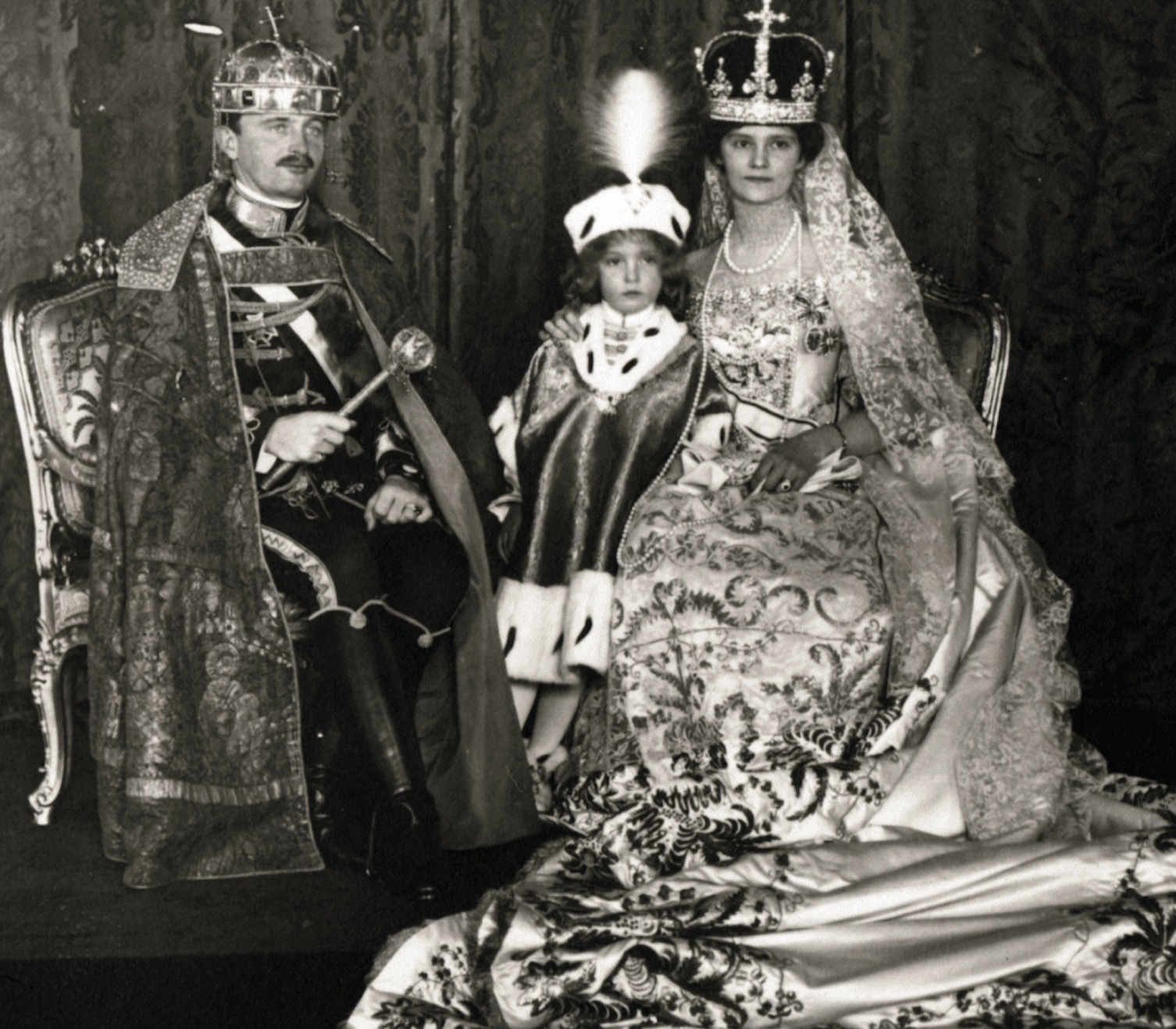
“I think she wanted to make sure that it was not in her lifetime,” Karl von Habsburg-Lothringen said of the jewels’ resurfacing. “I have the feeling she was very glad that some important objects of the family are something that she had saved. That was historically very important for her, because she was somebody who was thinking very much in historic terms.”
The family says it wants to display the diamond at a Canadian museum in the next few years. But there is no plan to sell the diamond, it said, and the family declined to speculate on the jewel’s monetary value.
It’s an extraordinary achievement to have managed to preserve it for 100 years actually incognito, Mr. Bassett said. It’s an astonishing tribute to the Empress Zita’s practical determination. And she was a very practical woman.”

Karl Habsburg says the jewelry should be exhibited; however, not initially in Austria, but in Canada. “As a family, we also want to show that we are very grateful to Canada for the refuge our grandmother found there,” says Habsburg.
What he doesn’t say is that the Habsburgs are worried that the Republic of Austria could lay claim to the family jewels that have been hidden for more than 100 years.
Before Köchert flew to Canada to see the Florentine and the other pieces of jewelry, they made a list at his shop, based on a 1918 treasury catalog.
Some of the items on the list are not among the jewels stored in a safe in Canada. Missing are, among other things, a brilliant-cut diamond tiara with a 44-carat diamond, an emerald set consisting of a tiara, corsage, and necklace, the famous rose necklace of Maria Theresa, and Sisi’s diamond crown.


