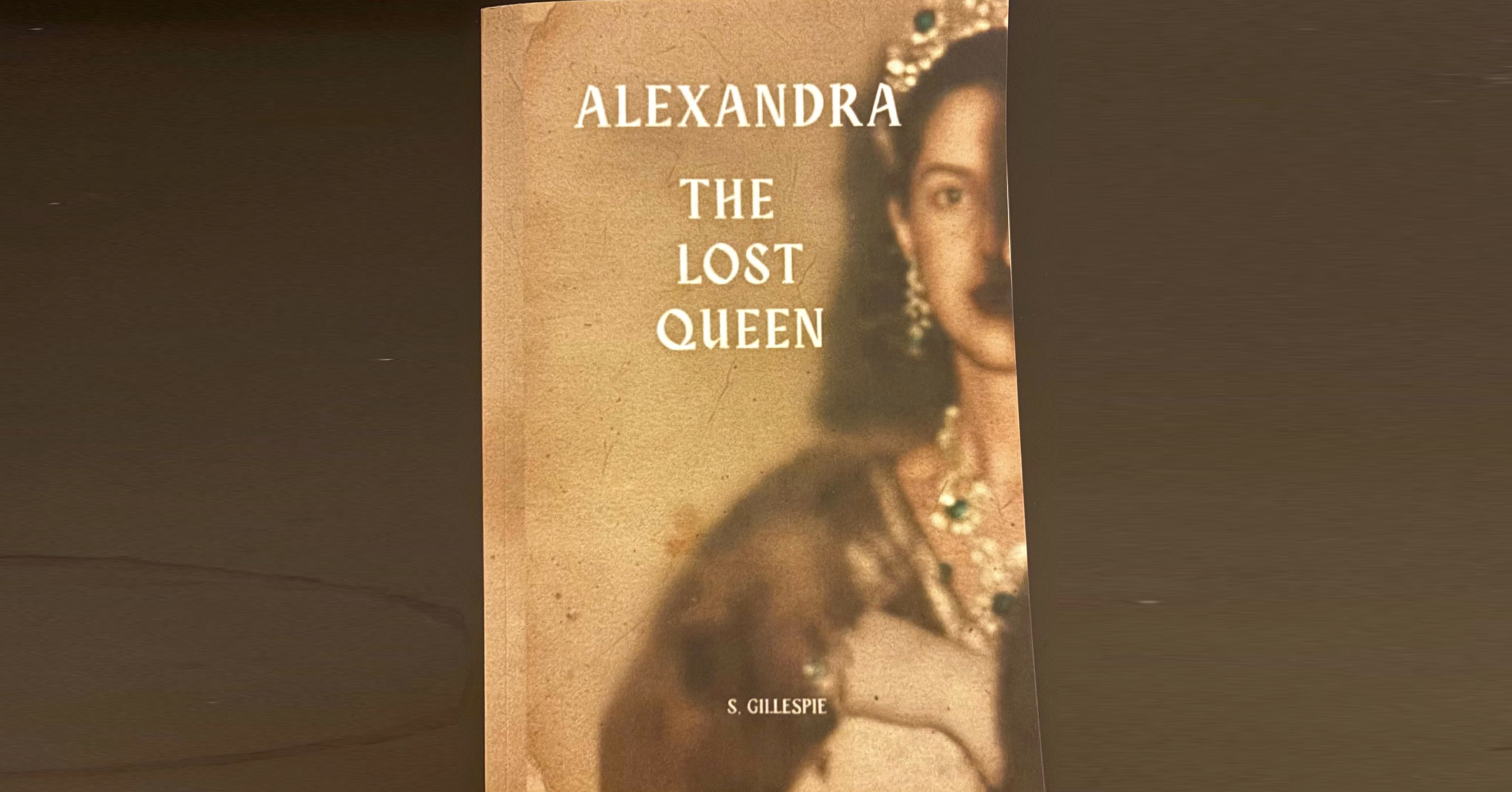
At the end of last month, our dear friend and Associate Editor Sam Gillespie published her long-awaited book, Alexandra – The Lost Queen, which brings renewed attention to the fascinating life of Queen Alexandra of Yugoslavia, a tragic life conducted in the dazzling public eye but ending largely in obscurity!

The book opens with an extensive overview of the Greek monarchy and the unusual marriage of Alexandra’s parents, a union that would have lasting repercussions on her life. The posthumous daughter of a King installed to appease the Allies and his morganatic wife, whom he had secretly married despite family disapproval, Princess Alexandra of Greece was born on the 100th anniversary of Greek independence, 25 March 1921, several months after her father’s death from a monkey bite. Yet she was not officially recognized as a Princess until over a year later, making her the only Greek Princess with any Greek blood.

Amid the turbulent Greek political landscape, Alexandra’s early years were spent in exile in Florence with her grandmother, Queen Sophia, who maintained close ties with her royal relatives across Europe. Royal events punctuated her childhood and adolescence, yet Gillespie highlights the isolation Alexandra endured as a consequence of her morganatic birth, and also delves into the finances of Princess Aspasia, which enabled the family to maintain their royal lifestyle, an aspect glossed over in Alexandra’s ghostwritten autobiography. As war erupted, Alexandra and her mother fled Italy for Greece, eventually following the royal family into exile in Egypt, then South Africa, and finally London, where Alexandra met King Peter of Yugoslavia.

Gillespie provides extensive background on King Peter, his tumultuous regency, and the political circumstances leading to his exile during World War II. Despite opposition from Peter’s difficult mother, he and Alexandra became engaged after a whirlwind romance. Gillespie notes, however, that even during their engagement, cracks in their relationship were already apparent, foreshadowing challenges that would later define their marriage.

Gillespie provides a nuanced portrait of the struggles of a marriage shaped by political exile and personal limitations. Much like her father’s accession and her parents’ marriage, Alexandra’s own marriage and the fate of the Yugoslav monarchy were shaped by forces far beyond her control, leaving a profound impact on her psychological well-being. Soon after their wedding, Yugoslavia fell to communist forces, and the King and Queen found themselves permanently in exile. Their inability to reconcile with this new reality led to a series of missteps that devastated their finances and strained their marriage, particularly as Peter struggled to provide any emotional or financial stability.


The next several decades of Queen Alexandra’s life were plagued with periods of significant emotional and mental distress, which Gillespie has mentioned with great compassion as the events destructively spiralled out of control. Alexandra’s life became increasingly unsettled, marked by financial missteps, emotional distress, and isolation from her royal relatives.

Particular attention is paid to King Peter’s erratic support of the Free Serbian Church, his main group of supporters in his final years, which further distanced him from his family. Gillespie also explores the confusing circumstances surrounding Peter’s death, highlighting the mysterious involvement of Mitzi Lowe, who later married his younger brother, Prince Andrej, but sharing in detail the confusing narratives that have still yet to offer any conclusions.

Through meticulous research and interviews with members of the extended Karađorđević family, as well as the memoirs of Prince Tomislav, Gillespie reconstructs Alexandra’s final years, which are largely unknown. These were marked by multiple breakdowns, several suicide attempts, and her eventual death in the United Kingdom largely forgotten by popular memory. Gillespie’s work revives her story, providing a nuanced and empathetic portrait of a life overshadowed by political upheaval and personal tragedy.

For a first-time author, Gillespie demonstrates remarkable sensitivity and tact, presenting her extensive research without imposing judgment, allowing readers to draw their own conclusions. Alexandra – The Lost Queen not only restores Alexandra’s story to public awareness but also contextualizes her struggles, offering a compelling examination of a Queen whose resilience and vulnerability were equally profound, and allowing readers to fully grasp the personal and political forces that shaped Alexandra’s extraordinary, yet often tragic, existence.

It has been an absolute honour to have been involved with this book and, in conclusion, Alexandra – The Lost Queen is a triumph of historical research and empathetic storytelling. It captures the complexities of a woman caught between dynastic duty and personal desire, political turbulence and private anguish. Through Gillespie’s meticulous reach, Queen Alexandra’s life, long eclipsed by obscurity, is finally illuminated, providing readers with a richer understanding of both the woman and the turbulent era she navigated. A long-forgotten Queen has at last taken her rightful place in history!

Buy Alexandra – The Lost Queen on Amazon!
Yugoslavian Emerald Tiara
Girandole Earrings
Pearl Earrings
Emerald Tiara
Fringe Tiara
Gold Tiara
Cartier Diamond Eagle
Vladimir Sapphire Kokoshnik
Romanian Massin Tiara
Fringe Tiara
Diamond Loop Tiara
Cartier Pearl Tiara
Cartier Sapphire Pendant
Diamond Sautoir

Thanks for sharing this! I look forward to reading the book!