Royal Guests from around the world joined the Nepalese Royal Family to celebrate the Coronation of King Birendra and Queen Aishwarya of Nepal in the Temple of the Hanuman Dhoka Palace in Kathmandu on this day in 1975, three decades before the Nepalese Royal Family’s gruesome massacre.


The Coronation of King Birendra and Queen Aishwarya of Nepal began with a ritual bathing ceremony which led to the crowning with the Emerald Crown and the Nepalese Diamond Tiara at an auspicious 8:37 a.m in the Temple of the Hanuman Dhoka Palace in the Kathmandu Durbar Square.
From daybreak in this Himalayan valley capital the 29‐ year‐old King Birendra Bir Bikram Shah Dev and dozens of Hindu priests had been moving through a series of exquisitely delicate rituals that culminated when the monarch walked slowly up to his golden throne, with its canopied backrest in the form of a hooded, 10‐headed cobra.


The King was smeared with mud from a dozen locations such as hills, rivers, farms and temples symbolizing that the new king is aware of his land. Then he ritually bathed with cow milk, yogurt, butter and honey. After cleaning, the king moved to sit in the golden throne while the priest chanted sacred Vedic mantras. The king bowed to the royal priest (Raj Guru). The Raj Guru then placed the royal crown on the head of Birendra at the auspicious moment of 8:37 am determined by the court astrologers. King Birendra bowed, and the royal high priest fixed the plumed crown on the monarch’s head. The crown is a hemet of diamonds, Pearl, rubies and emeralds.

The king vowed “I shall tend to the growth of the country, regarding it as God himself. I shall remain alert and active for the sake of my country. I shall be my peoples’ beloved, like the raindrops.” in Sanskrit.


The Coronation Ceremony was followed by King Birendra and Queen Aishwarya riding in a Procession on Elephants through the streets of Kathmandu.
After the crowning, the King stepped from the throne; Later in the day he mounted an elephant draped in velvet cloth and festooned with golden bells and rode in a gold and silver howdah around the temples and palaces of the Hanuman Dhoka area. Tens of thousands of Nepalese, including hill people who trekked into the valley over the last few days, lined the downtown streets to gaze at the procession of elephants and limousines that moved to and from the temple‘ area.

Later in the day, king rode an elephant named Prem Prasad draped in velvet cloth, gold and silver and visited temples and places near the palace. Another 22 elephants followed the king carrying the guests.


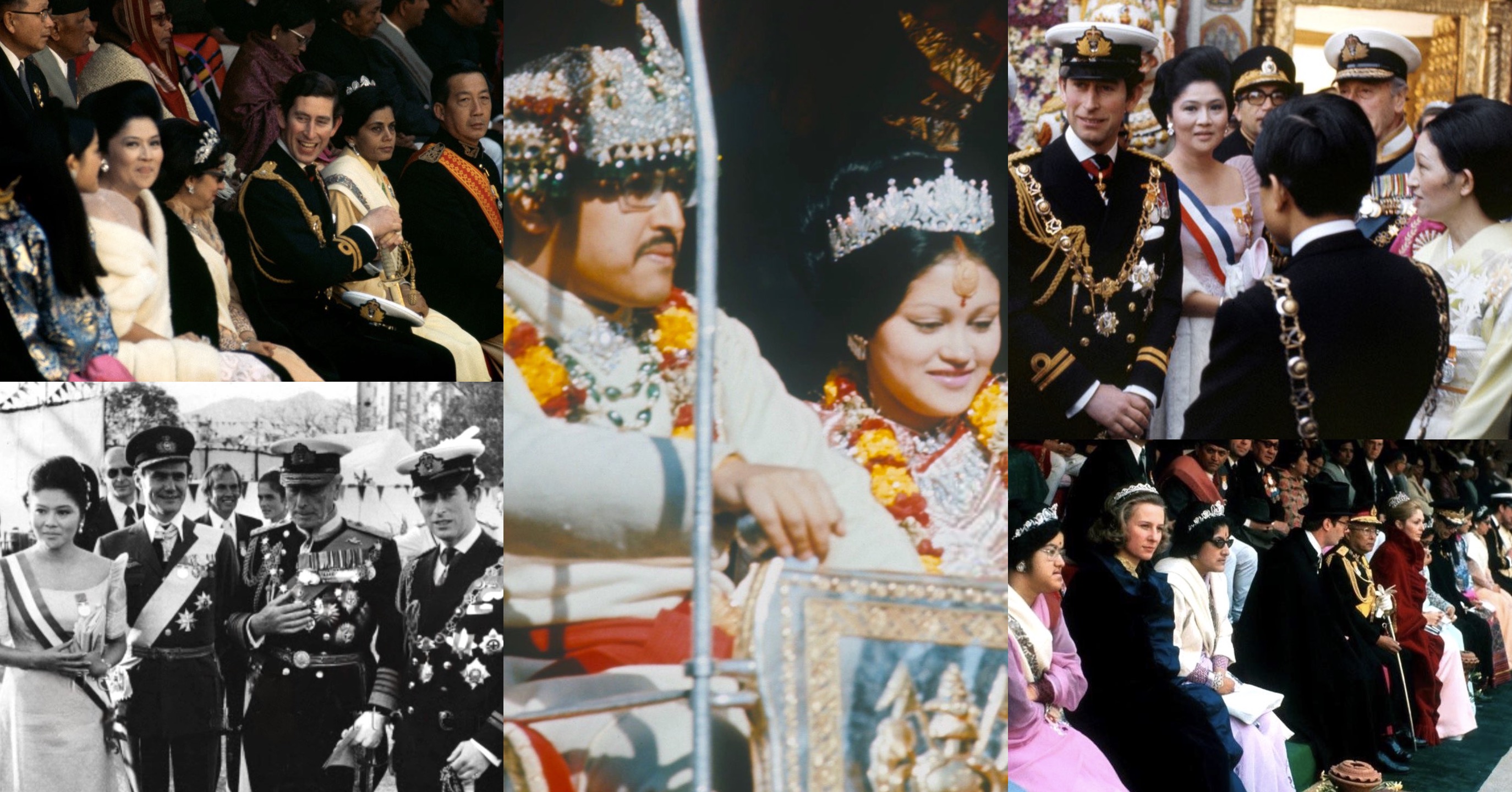
Royal Guests included the Prince of Wales, Crown Prince Akihito and Crown Princess Michiko of Japan, Crown Prince Vong Savang of Laos, Prince Henrik of Denmark, the Duke and Duchess of Gloucester (wearing the Diamond Necklace Tiara), Prince Bhanubandhu Yugala of Thailand, Prince Gholam Reza Pahlavi and Princess Manijeh of Iran, Princess Dechen Wangmo Wangchuck of Bhutan, Earl Mountbatten of Burma, Prince Sadruddin Aga Khan, the Chogyal Palden Thondup Namgyal of Sikkim, Tengku Ahmad Rithauddeen Tengku Ismail of Kelantan, Raja Jigme Prabal Bista of Mustang, Maharaja Madhavra Scindia and Maharani Madhavi Raje Sahib Scindia of Gwailor, and First Lady Imelda Marcos of the Philippines.
Representatives of nearly 60 nations, including European and Asian royalty, sat on low. cushioned benches and, witnessed the elaborate processions and ceremonies in a restored courtyard of the Hanuman Dhoka, or Monkey God Gate, a block of stone and wood pagodas and palaces that served as the historic seat of Nepal’s royalty. It is now near the heart of Katmandu’s bazaar.


The Prince of Wales with Crown Prince Akihito and Crown Princess Michiko of Japan and Earl Mountbatten of Burma

The Prince of Wales with Prince Henrik of Denmark and First Lady Imelda Marcos


The Duke and Duchess of Gloucester (wearing the Diamond Necklace Tiara) with the Nepalese Princesses (wearing their Diamond Tiaras)

Prince Gholam Reza Pahlavi and Princess Manijeh of Iran

Princess Dechen Wangmo Wangchuck of Bhutan

King Birendra and Queen Aishwarya were killed with 10 other members of the Nepalese Royal family in 2001, by their eldest son, Crown Prince Dipendra. The Nepalese monarchy, the last surviving Hindu Kingdom, was abolished in 2008.
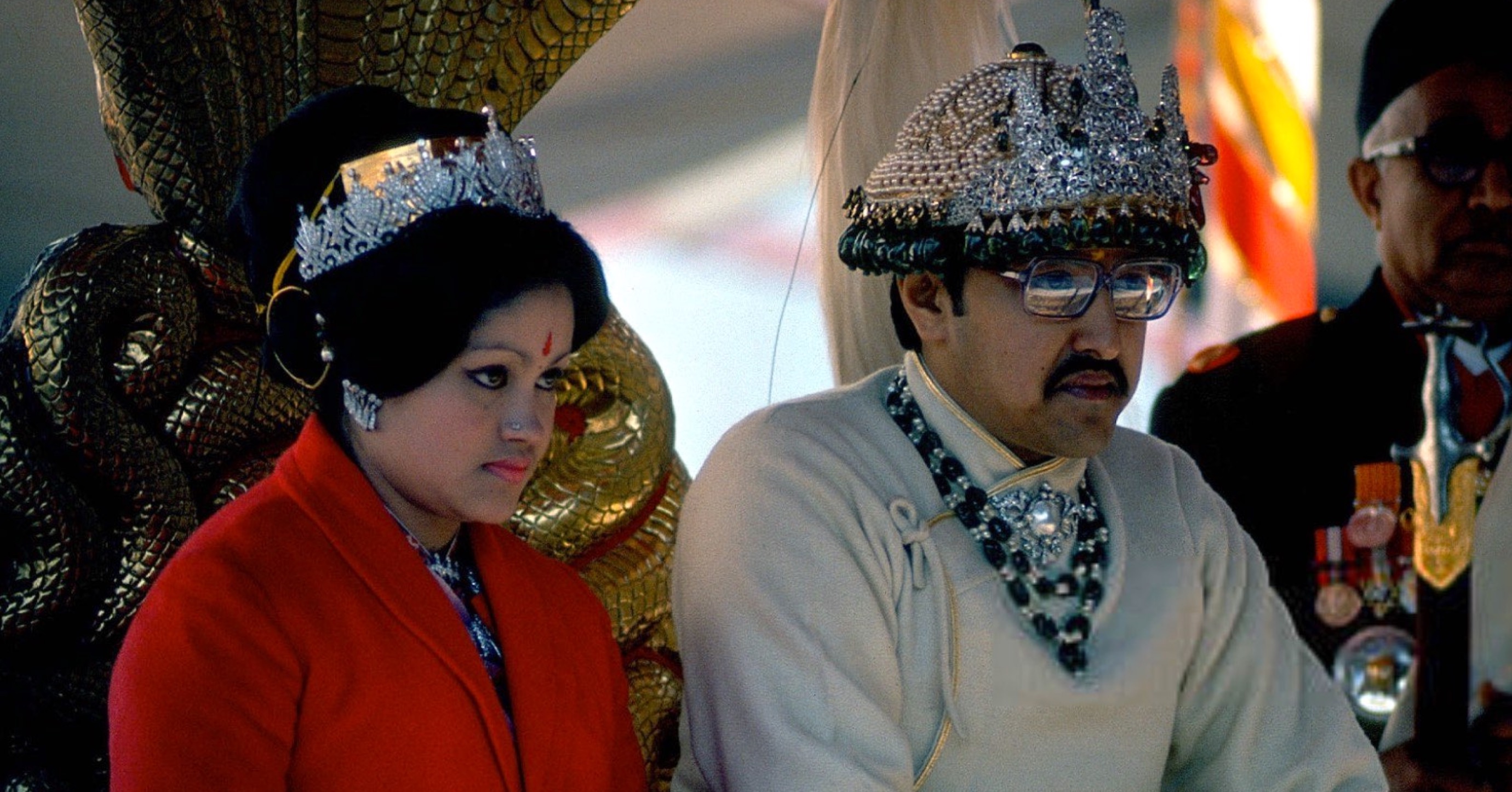
Nepalese Diamond Tiara
Nepalese Emerald Tiara
Embed from Getty Images
Embed from Getty Images
Coronation of King Birendra and Queen Aishwarya of Nepal on this day in 1975, which started with a ritual bathing ceremony which led to the crowning with the Emerald Crown and the Nepalese Diamond Tiara at an auspicious 8:37 a.m in the Temple of the Hanuman Dhoka Palace, followed by a Procession on Elephants through the streets of Kathmandu. King Birendra and Queen Aishwarya were killed with 10 other members of the Nepalese Royal family in 2001, by their eldest son, Crown Prince Dipendra. The Nepalese monarchy, the last surviving Hindu Kingdom, was abolished in 2008.
Embed from Getty Images
#RoyalFlashback- Royal Guests from around the world at the Coronation of King Birendra and Queen Aishwarya of Nepal in Katmandu #OnThisDay 45 year ago: https://t.co/5qdAf20rI9 pic.twitter.com/4GJJ6kTrnI
— The Royal Watcher (@saadsalman719) February 22, 2020
#RoyalFlashback- Royal Guests from around the world at the Coronation of King Birendra and Queen Aishwarya of Nepal in Katmandu #OnThisDay 45 year ago: https://t.co/5qdAf20rI9 pic.twitter.com/4GJJ6kTrnI
— The Royal Watcher (@saadsalman719) February 22, 2020Royal Guests included the Prince of Wales, Crown Prince Akihito and Crown Princess Michiko of Japan, Crown Prince Vong Savang of Laos, Prince Henrik of Denmark, the Duke and Duchess of Gloucester (wearing the Gloucester Necklace Tiara), Prince Bhanubandhu Yugala of Thailand, Prince Gholam Reza Pahlavi and Princess Manijeh of Iran, Princess Dechen Wangmo Wangchuck of Bhutan, Lord Mountbatten, Prince Sadruddin Aga Khan, the Chogyal Palden Thondup Namgyal of Sikkim, Tengku Ahmad Rithauddeen Tengku Ismail of Kelantan, Raja Jigme Prabal Bista of Mustang, Maharaja Madhavra Scindia and Maharani Madhavi Raje Sahib Scindia of Gwailor, and First Lady Imelda Marcos of the Philippines.

For more information, check out:
Oh, my goodness! I remember the massacre. What a terrible thing to happen! I find it difficult to believe that the Crown Prince did this, but facts are very hard to come by about this incident. Maybe the true story of this horrific event will never be fully revealed. May they all rest in peace.
When I wrote that originally (this is an updated version of an article I wrote two years ago), I believed the official version, but as a political science student now, it wouldn’t surprise me if the Americans, Chinese, or Indians were behind the massacre and the subsequent fall of the monarchy! Sadly, Nepal and the Nepalese people are just one pawn in a bigger geopolitical game!
This will probably remain a mystery- at least in our lifetime! It’s sort of like “Who killed Kennedy?”. I’ve given up on the possibility of ever knowing that before I die.
The massacre has always been something that is shrouded with conspiracy, however the truth is grim and bitter, it was Dipendra who killed them and yes, western powers and india played a pivotal role in the abolishment of the monarchy in order to destabilize Nepal.
Kathmandu,Nepal
The facts are not hard to come by. Reliable eyewitnesses have shared what they experienced. They are just clouded by the lie that Dipendra committed suicide. He was shot in order to stop him killing more relatives. Dr Upendra Devkota’s medical report made that obvious. There is a romantic, but silly, notion that no boy could ever hurt his parents. History and psychology say otherwise. A cloud of suspicion surrounds Gyanendra because he was not a popular figure like Birendra, and because he happened to be absent that night. His wife, who was shot, and his son, who saved several of his cousins by hiding them, were there. The government of the time, anxious not to heighten tensions did a foolhardy job of relating the news.